
Today, I read this article, “The never-ending grief of dementia,” which brought back many memories and experiences in the never-ending grief of dementia.
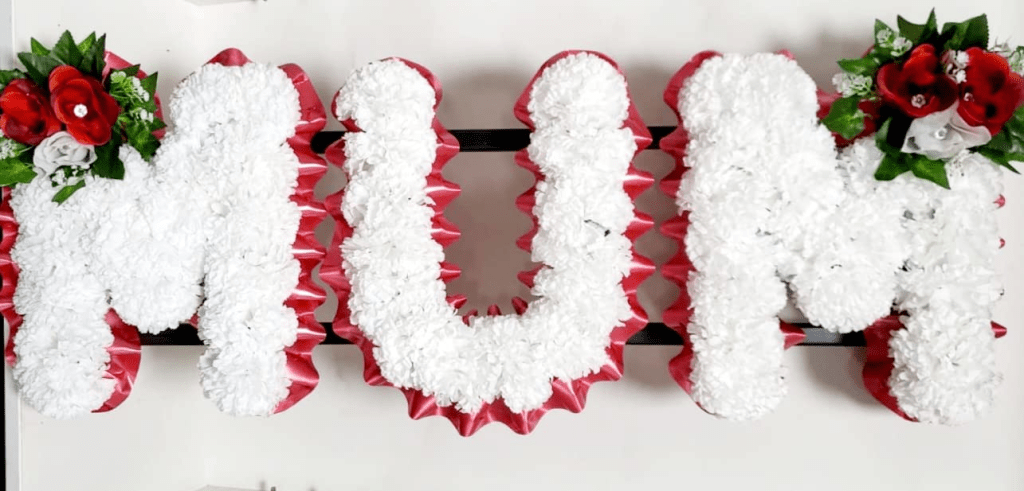
This article really resonates with me, especially in light of my own experience of losing my mother—not once, but twice. It’s hard to pinpoint exactly when Mum started losing her memory, but as a family, we began to notice subtle signs at different times. We were all at various stages of acceptance, and I remember one instance in our family WhatsApp group where we argued over an event that she had mentioned to one of us. My sibling was convinced it was factual, since Mum had provided very specific details. But as time went on, it became clear that she was blending events and creating new interpretations, unable to remember certain details accurately.
Navigating between respecting her autonomy and managing the growing challenges was difficult. Small things began to signal that something was wrong—like when she left the electric kettle on without water or forgot to turn off the gas stove. As a safety measure, we removed unnecessary appliances from the house. Mum was fiercely independent, particularly in the kitchen, and she resisted any help. Finding a house worker was also a struggle. We were caught between ensuring her safety and honoring her wish to remain in control of her environment.
As her condition progressed, we became more mindful of how we communicated with her. One day, I called her, and she was holding the phone in such a way that I couldn’t hear her clearly. I mentioned that the call was unclear, and the next thing I knew, she had stopped using the phone altogether, convinced I had said it was broken and I would buy her a new one. The phone was new, yes, but it was slightly different from the one she had used before, and my brother had struggled to find the exact model. After that, she never used the phone again. It wasn’t a huge issue—we were able to communicate with Dad instead.
We slowly realized that Mum could no longer manage new things on her own. So, when we needed to replace items, we tried to get exact matches for what she was familiar with—little things like that. But there were also bigger issues, like when she started misplacing significant amounts of money over time. Dad had to take on a bigger role in ensuring everything in the kitchen was safe, especially when it came to turning off the gas, which was a major hazard.
Eventually, Mum and Dad both agreed to having a helper in the house. Over time, Mum allowed the helper to cook for them, which, though difficult, was a huge relief. It was one less thing for her to manage, and one less thing for all of us to worry about.
The Long Road: Navigating the Emotional and Practical Challenges of Dementia
It was an arduous journey, watching my mum slowly slip away from the vibrant woman she once was, while my dad grappled with sadness and frustration, unable to fully understand how to care for her. I would watch her and wonder, Is she happy? What was she feeling deep inside? It was as though she was becoming someone else, and I was losing the connection we once shared.
There were times when she would tell a story — she was always such a great storyteller — and I would soon realize she wasn’t talking to me at all. One day, she spoke to me about something and then casually mentioned my grandfather’s advice, as if he were still alive. But my grandpa had passed away in the early ‘80s. She was looking at me, but somehow speaking to me like I was one of her younger sisters. It broke my heart. I would keep a straight face, hiding the tears I shed in private. My heart ached with every moment she didn’t recognize me. I would hope, with all my being, that she would know me when I came home. Sometimes she did, but often she didn’t. And every time, I cried. Eventually, the tears didn’t come as often when she didn’t recognize me anymore, but what remained was a profound understanding that, at least in that moment, I knew her. I still loved her.
One day, I went home with a friend. Mum was in great spirits, telling us stories from her childhood and laughing with us. For a few precious hours, I felt like I had the mum I used to know back. But, shortly after we left, she told my sister-in-law that some women had come to visit. She had forgotten everything. It was painful, but it became part of our reality.
The Strain of Dementia on Her Health
Dementia didn’t just cloud her memory—it also took a toll on her physical health. Despite the numerous hospital visits, her dementia was never officially diagnosed, and the challenges continued to grow. Mum had managed her diabetes and blood pressure well, sticking to her medication and diet with remarkable discipline. She rarely had issues. But as her memory faltered, so did her self-care. She began refusing her medication and rejecting the healthy meals she once insisted on. Her health began to decline as she gained back the weight she had once lost, and her love for sugar and wheat became a constant challenge.
Mum, being her usual strong-willed self, was often hard to convince when it came to making changes. She’d insist, “No doctor has ever told me not to take sugar.” She was firm, and no matter how much we explained, she wouldn’t back down. So, we began hiding the sugar, even enforcing a no-sugar policy in the house. But she’d find ways around it, pouring sugar into her tea whenever she could. The struggle to get her to follow basic health routines became a daily battle, and her assertiveness made it all the more difficult.
There were days when convincing her to do something as simple as taking a shower, going to bed, or even just getting up was exhausting. Sometimes, it would take an hour of gentle coaxing, repeating instructions repeatedly as if starting from scratch. I often felt helpless, but my younger sister had a way with her. She could calm Mum down and get things done. I would freeze and lack the strength for this. I didn’t have the right words to explain the feeling of helplessness that would wash over me in those moments, but it was overwhelming. I tried to avoid being the one to push her to do anything. The knot in my stomach would tighten, but I knew we were all doing our best.
Interestingly, Mum would often listen to my brothers more readily. After an hour or more of trying to get her to do something, if one of my brothers came along, she would usually obey. It taught us all a lot about patience and compassion. We learned to stay calm, to laugh, and to accept the small victories—getting her to take that shower or go to bed, even if it took longer than we thought.
The journey was hard, but we held on to the love we still shared..
But Is She Really Happy?
A question kept nagging me—is she really happy? I wished I could get into her mind and know for sure. We did our best, but was it enough? It often felt like trial and error, navigating through her needs and struggles, hoping we were making the right choices.
The Uncertainty of Care
Visits to the hospital offered no solutions for her memory loss. Sometimes, the medications made things worse, leaving her drowsy for most of the day. While we were focused on Mum’s deteriorating health, Dad’s illness crept up on us too. His body weakened, but his memory remained sharp until the day he rested.
Mum, however, was slipping further into dementia, struggling to fit into a world that no longer made sense to her. I learned that memory loss first erases the recent past, leaving only distant years’ memories intact. She seemed to be living in an earlier time, perhaps her youth—before we were even in her life. Our home felt foreign to her. She would often ask, “When are we leaving?” even when we were sitting in our family home.
Saying goodbye became unbearable. She didn’t recognize home, so every departure felt like abandonment. Eventually, I stopped saying goodbye. I would simply pray, hope to see her again, and walk away.
When Words and Food Were No More
Then came the silence.
One morning, she stopped speaking. She stopped eating. The doctors had no explanation. She no longer recognized us, and we could no longer communicate. The last year of her life was the hardest. Where once we struggled to monitor how much she ate, suddenly, we were desperate to get her to eat at all. Her brain no longer signaled hunger.
At the same time, Dad was in the hospital. Another crisis.
In desperation, I brought a blender home, hoping liquid food might work. It did—this was how she ate for the last year of her life. Still, no test could explain what had happened. By the time Dad passed away, she had no idea. We tried to tell her, but she couldn’t comprehend it. In the end, we let it be.
I missed her stories—those tales of our childhood, even the embarrassing ones.
I missed her sharp analysis of life, her unwavering spirit, her fierce independence. I even missed her stubborn resistance, her refusal to go to bed, because at least then, she was there.
But dementia had already taken her from us. And then, on December 30, 2022, we lost her again.
Mourning Her Twice
Her death was more painful than I ever imagined.
I wasn’t just mourning her passing—I was grieving the last three years when she had been physically present but emotionally out of reach. It felt unfair, like time had been stolen from us. I wrestled with God, questioning why dementia had robbed us of our goodbyes.
For months following her death, all I could remember was her decline—the silence, the confusion, the absence. Try as I might, I couldn’t recall her laughter, her warmth, the woman she was before dementia took hold. I was stuck in the pain of those final years.
Until the day I started remembering her. My real mother. The day I started seeing her happy self and hearing her laughter was the beginning of healing. Even in my dreams, I could finally remember the mother I knew.
This experience taught us many lessons on caring for older persons and especially people with dementia.
Someone experiencing memory loss already senses that something is wrong. Reminding her will only deepen her distress. Family members often try to jog her memory with, “Do you know who this is?”
This would often happen with the caretakers and despite reminding them somehow they would be excited and hopeful that this time she could remember. I always quickly countered with the self-introduction, “Of course she does! It’s Sophia.” Instead of testing her memory, I gently introduced myself in a way that preserved her dignity. This was not the time to push her to remember; it only made her more anxious.
Repetition became the norm. I once visited a relative with memory loss and reintroduced myself and my son five times within an hour. I didn’t mind. What mattered was making her feel comfortable, not pointing out what she had forgotten. I was careful never to say, “As I told you before…” Instead, I treated each introduction like the first time.
It is heartbreaking to visit a loved one who no longer recognizes you. Many family members find it too painful and start avoiding visits. But I read something during this time that stuck with me: you know and love them, even if they don’t remember you.
I reminded my extended family—especially my nieces and nephews, who struggled with their grandma not knowing them. Visit anyway. Even if she forgot the moment you left, your presence still mattered.
Eventually, I stopped crying every time my mother didn’t recognize me. I focused on the moments when she looked content. When she seemed comfortable. When she smiled. Those were the gifts.
An Unending Grief
Dementia is a unique kind of loss—one that unfolds slowly, stealing pieces of a person long before their final breath. A parent, a grandparent—losing them to dementia is an ongoing grief, a sorrow that doesn’t wait for death to begin.
Be gentle with yourself.
 I am a child of the universe
Wow, this is both sad and inspiring in the lessons you still took from the experiences. It takes one kind of courage to go through all that pain and loss; and a totally different kind to share the story.
LikeLike