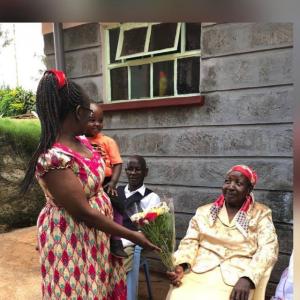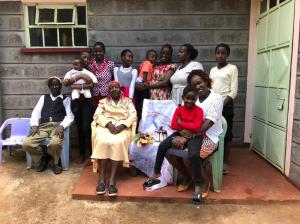
Losing mum over and over again: the grief of dementia and death.

Today, I read this article, “The never-ending grief of dementia,” which brought back many memories and experiences in the never-ending grief of dementia.
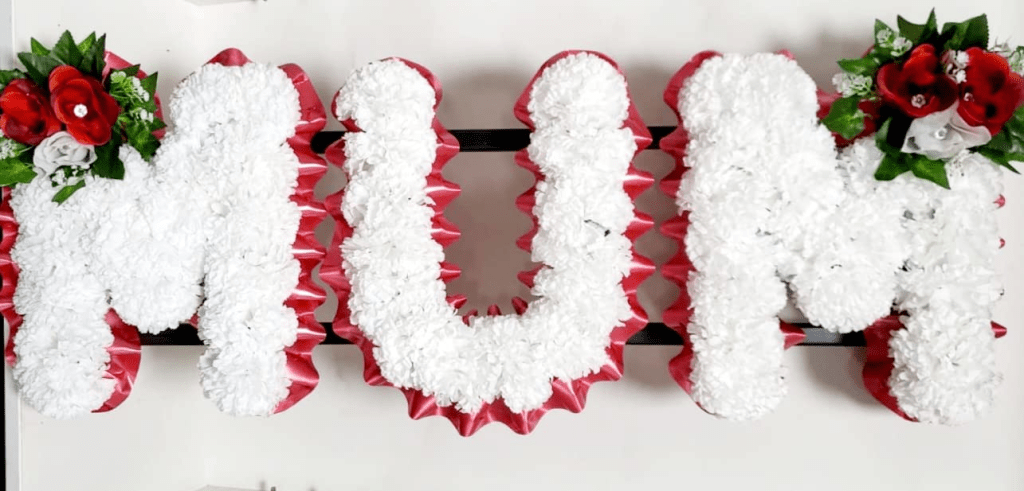
This article really resonates with me, especially in light of my own experience of losing my mother—not once, but twice. It’s hard to pinpoint exactly when Mum started losing her memory, but as a family, we began to notice subtle signs at different times. We were all at various stages of acceptance, and I remember one instance in our family WhatsApp group where we argued over an event that she had mentioned to one of us. My sibling was convinced it was factual, since Mum had provided very specific details. But as time went on, it became clear that she was blending events and creating new interpretations, unable to remember certain details accurately.

Navigating between respecting her autonomy and managing the growing challenges was difficult. Small things began to signal that something was wrong—like when she left the electric kettle on without water or forgot to turn off the gas stove. As a safety measure, we removed unnecessary appliances from the house. Mum was fiercely independent, particularly in the kitchen, and she resisted any help. Finding a house worker was also a struggle. We were caught between ensuring her safety and honoring her wish to remain in control of her environment.

As her condition progressed, we became more mindful of how we communicated with her. One day, I called her, and she was holding the phone in such a way that I couldn’t hear her clearly. I mentioned that the call was unclear, and the next thing I knew, she had stopped using the phone altogether, convinced I had said it was broken and I would buy her a new one. The phone was new, yes, but it was slightly different from the one she had used before, and my brother had struggled to find the exact model. After that, she never used the phone again. It wasn’t a huge issue—we were able to communicate with Dad instead.

We slowly realized that Mum could no longer manage new things on her own. So, when we needed to replace items, we tried to get exact matches for what she was familiar with—little things like that. But there were also bigger issues, like when she started misplacing significant amounts of money over time. Dad had to take on a bigger role in ensuring everything in the kitchen was safe, especially when it came to turning off the gas, which was a major hazard.

Eventually, Mum and Dad both agreed to having a helper in the house. Over time, Mum allowed the helper to cook for them, which, though difficult, was a huge relief. It was one less thing for her to manage, and one less thing for all of us to worry about.

The Long Road: Navigating the Emotional and Practical Challenges of Dementia

It was an arduous journey, watching my mum slowly slip away from the vibrant woman she once was, while my dad grappled with sadness and frustration, unable to fully understand how to care for her. I would watch her and wonder, Is she happy? What was she feeling deep inside? It was as though she was becoming someone else, and I was losing the connection we once shared.

There were times when she would tell a story — she was always such a great storyteller — and I would soon realize she wasn’t talking to me at all. One day, she spoke to me about something and then casually mentioned my grandfather’s advice, as if he were still alive. But my grandpa had passed away in the early ‘80s. She was looking at me, but somehow speaking to me like I was one of her younger sisters. It broke my heart. I would keep a straight face, hiding the tears I shed in private. My heart ached with every moment she didn’t recognize me. I would hope, with all my being, that she would know me when I came home. Sometimes she did, but often she didn’t. And every time, I cried. Eventually, the tears didn’t come as often when she didn’t recognize me anymore, but what remained was a profound understanding that, at least in that moment, I knew her. I still loved her.

One day, I went home with a friend. Mum was in great spirits, telling us stories from her childhood and laughing with us. For a few precious hours, I felt like I had the mum I used to know back. But, shortly after we left, she told my sister-in-law that some women had come to visit. She had forgotten everything. It was painful, but it became part of our reality.

The Strain of Dementia on Her Health

Dementia didn’t just cloud her memory—it also took a toll on her physical health. Despite the numerous hospital visits, her dementia was never officially diagnosed, and the challenges continued to grow. Mum had managed her diabetes and blood pressure well, sticking to her medication and diet with remarkable discipline. She rarely had issues. But as her memory faltered, so did her self-care. She began refusing her medication and rejecting the healthy meals she once insisted on. Her health began to decline as she gained back the weight she had once lost, and her love for sugar and wheat became a constant challenge.

Mum, being her usual strong-willed self, was often hard to convince when it came to making changes. She’d insist, “No doctor has ever told me not to take sugar.” She was firm, and no matter how much we explained, she wouldn’t back down. So, we began hiding the sugar, even enforcing a no-sugar policy in the house. But she’d find ways around it, pouring sugar into her tea whenever she could. The struggle to get her to follow basic health routines became a daily battle, and her assertiveness made it all the more difficult.

There were days when convincing her to do something as simple as taking a shower, going to bed, or even just getting up was exhausting. Sometimes, it would take an hour of gentle coaxing, repeating instructions repeatedly as if starting from scratch. I often felt helpless, but my younger sister had a way with her. She could calm Mum down and get things done. I would freeze and lack the strength for this. I didn’t have the right words to explain the feeling of helplessness that would wash over me in those moments, but it was overwhelming. I tried to avoid being the one to push her to do anything. The knot in my stomach would tighten, but I knew we were all doing our best.

Interestingly, Mum would often listen to my brothers more readily. After an hour or more of trying to get her to do something, if one of my brothers came along, she would usually obey. It taught us all a lot about patience and compassion. We learned to stay calm, to laugh, and to accept the small victories—getting her to take that shower or go to bed, even if it took longer than we thought.

The journey was hard, but we held on to the love we still shared..

But Is She Really Happy?

A question kept nagging me—is she really happy? I wished I could get into her mind and know for sure. We did our best, but was it enough? It often felt like trial and error, navigating through her needs and struggles, hoping we were making the right choices.

The Uncertainty of Care

Visits to the hospital offered no solutions for her memory loss. Sometimes, the medications made things worse, leaving her drowsy for most of the day. While we were focused on Mum’s deteriorating health, Dad’s illness crept up on us too. His body weakened, but his memory remained sharp until the day he rested.

Mum, however, was slipping further into dementia, struggling to fit into a world that no longer made sense to her. I learned that memory loss first erases the recent past, leaving only distant years’ memories intact. She seemed to be living in an earlier time, perhaps her youth—before we were even in her life. Our home felt foreign to her. She would often ask, “When are we leaving?” even when we were sitting in our family home.

Saying goodbye became unbearable. She didn’t recognize home, so every departure felt like abandonment. Eventually, I stopped saying goodbye. I would simply pray, hope to see her again, and walk away.

When Words and Food Were No More

Then came the silence.

One morning, she stopped speaking. She stopped eating. The doctors had no explanation. She no longer recognized us, and we could no longer communicate. The last year of her life was the hardest. Where once we struggled to monitor how much she ate, suddenly, we were desperate to get her to eat at all. Her brain no longer signaled hunger.

At the same time, Dad was in the hospital. Another crisis.

In desperation, I brought a blender home, hoping liquid food might work. It did—this was how she ate for the last year of her life. Still, no test could explain what had happened. By the time Dad passed away, she had no idea. We tried to tell her, but she couldn’t comprehend it. In the end, we let it be.

I missed her stories—those tales of our childhood, even the embarrassing ones.

I missed her sharp analysis of life, her unwavering spirit, her fierce independence. I even missed her stubborn resistance, her refusal to go to bed, because at least then, she was there.

But dementia had already taken her from us. And then, on December 30, 2022, we lost her again.

Mourning Her Twice

Her death was more painful than I ever imagined.

I wasn’t just mourning her passing—I was grieving the last three years when she had been physically present but emotionally out of reach. It felt unfair, like time had been stolen from us. I wrestled with God, questioning why dementia had robbed us of our goodbyes.

For months following her death, all I could remember was her decline—the silence, the confusion, the absence. Try as I might, I couldn’t recall her laughter, her warmth, the woman she was before dementia took hold. I was stuck in the pain of those final years.

Until the day I started remembering her. My real mother. The day I started seeing her happy self and hearing her laughter was the beginning of healing. Even in my dreams, I could finally remember the mother I knew.

This experience taught us many lessons on caring for older persons and especially people with dementia.

Someone experiencing memory loss already senses that something is wrong. Reminding her will only deepen her distress. Family members often try to jog her memory with, “Do you know who this is?”

This would often happen with the caretakers and despite reminding them somehow they would be excited and hopeful that this time she could remember. I always quickly countered with the self-introduction, “Of course she does! It’s Sophia.” Instead of testing her memory, I gently introduced myself in a way that preserved her dignity. This was not the time to push her to remember; it only made her more anxious.

Repetition became the norm. I once visited a relative with memory loss and reintroduced myself and my son five times within an hour. I didn’t mind. What mattered was making her feel comfortable, not pointing out what she had forgotten. I was careful never to say, “As I told you before…” Instead, I treated each introduction like the first time.

It is heartbreaking to visit a loved one who no longer recognizes you. Many family members find it too painful and start avoiding visits. But I read something during this time that stuck with me: you know and love them, even if they don’t remember you.

I reminded my extended family—especially my nieces and nephews, who struggled with their grandma not knowing them. Visit anyway. Even if she forgot the moment you left, your presence still mattered.

Eventually, I stopped crying every time my mother didn’t recognize me. I focused on the moments when she looked content. When she seemed comfortable. When she smiled. Those were the gifts.

An Unending Grief

Dementia is a unique kind of loss—one that unfolds slowly, stealing pieces of a person long before their final breath. A parent, a grandparent—losing them to dementia is an ongoing grief, a sorrow that doesn’t wait for death to begin.

Be gentle with yourself.

When it is time, you can say goodbye.

The Weight of Unspoken Words

I don’t want to talk about it anymore. I don’t feel like writing about it. Yet, it still matters.

Those were the words swirling in my head over the past few months. Writing has always been therapeutic for me, yet I have felt stuck—unsure of where to begin or how to restart. Do I have anything left to say? What if I just start typing? But then, either there aren’t enough words, or there are so many that I can’t seem to pin them down. Where do I even start?

The internal monologue continued, a constant hum in the background of my thoughts. Then, as if the universe had grown impatient with my hesitation, it sent me undeniable nudges. I had ignored previous ones, but these were louder. Over the past year, people had reached out to tell me how much my writing resonated with them as they processed their own losses. Yet, I felt I had no more words, so I remained silent.

A Nudge from the Universe

Then, in the span of two weeks, two different people nudged me to write again—one a long-time friend, the other a stranger. My friend, whom I hadn’t seen in years, simply asked, “Why did you stop writing?” The stranger found my blog through an email reply and sent me a message:

“Don’t stop writing. Your blog spoke to me and blessed me. As someone who has lost a parent, it resonated deeply. I cried, and I felt better.”

I started writing. Maybe the words would come. I tried the entire week, but they remained scarce. I kept trying, grasping for sentences that never fully formed. Then came Father’s Day, Sunday, June 16.

The Bittersweet Weight of Father’s Day

I woke up thinking of my dad—how he had come to treasure our phone calls on Father’s Day, how his voice had carried both strength and tenderness. The day was filled with fond memories and aching sadness, the longing for one more conversation, one more Father’s Day, one more Christmas. But that was a different universe, one that no longer existed. The best I could do was bid him another goodbye—and as many goodbyes as I needed.

And then, the words came. Something within me stirred, and I wrote.

Goodbye is a Process

My thoughts drifted back to January when we commemorated Mum’s first memorial anniversary. After a beautiful memorial service, I felt ready to say a proper goodbye. The day had a tranquil beauty to it. Despite the heavy rains that made the roads nearly impassable, friends and family still came. The choir sang, and as we unveiled the cross and laid fresh flowers, I tried to say goodbye.

This time, I could see where her grave was. That might sound strange, but during the funeral, it had felt as if the grave had shifted—my mind refusing to fully comprehend that she was gone. I remember a friend urging me, “Look and say goodbye,” but I could barely manage it. A year later, it felt possible.

That day, I realized one of the greatest gifts I had received in my grief: the presence of friends and relatives who had walked with us through the darkest moments. It mattered. I was saying goodbye to my mother—not just acknowledging her passing, but truly letting go of the grasping conversations I had been having in my head, the silent questions without answers.

Carrying Their Blessings

And there they were, my parents, side by side. Just a year apart. The pillars of our family were gone. A wave of loneliness washed over me.

That same night, I was leaving for Cairo. It was a significant journey, and somehow, I felt I was carrying them with me in my heart. I had no idea what awaited me in ‘Pharaoh’s land’, but I held on to the thought that they were with me in ways that transcended physical presence.

Still, I kept moving. I needed to return to Nairobi for last-minute travel preparations, yet I found myself lingering. I wandered from one room to another, not quite ready to leave. My friend patiently waited in the car, engine running, but I couldn’t stop pacing. It wasn’t about reaching 10,000 steps—I was searching for something. One more thing to do, one more person to embrace, one more goodbye to say.

A Blessing Before the Journey

And then my cousin found me.

“My mum has been looking for you,” she said. “She must see you before she leaves.”

I wondered why. And then, my aunt—my ‘younger mum’ in Kikuyu tradition—blessed me. She placed her hands on me and prayed. I don’t know if she fully understood what that meant to me. But in that moment, something settled in my heart. Moments later, two of my uncles—my ‘younger dads’—called me over.

“Oh, we’ve been looking for you. We must bless you before you go.”

Tears welled in my eyes. My parents had blessed me—through them. By proxy.

Finally, I felt ready to leave.

Living with the New Reality

Grief has taught me that goodbyes aren’t singular events. They unfold over time, in layers. I have said goodbye to my parents countless times in the past two years, and I will continue to do so. But I also carry them with me. Their absence doesn’t lessen the love, and remembering them doesn’t deepen the grief—it simply means I have learned to live in this new reality.

I miss them no less. But now, when I think of them, the tears are softer, the memories warmer. Saying goodbye does not mean forgetting. The love remains, woven into the fabric of my being.

And so, I keep writing.

“We do not “get over” a death. We learn to carry the grief and integrate the loss in our lives. In our hearts, we carry those who have died. We grieve and we love. We remember.” ― Nathalie Himmelrich,

For me, saying goodbye again and again is part of my process of letting go and accepting that life as I knew it would never be the same. It is also a process of appreciating that there are still precious experiences ahead, and I want to live fully—not just look at the grave.

A friend once told me that when people leave this physical life, we can take solace in knowing that we can speak with them wherever we are, no longer constrained by time and space. When the moment feels right, we can say goodbye, over and over, as needed.

What remains are the memories—both joyful and painful. The illness and death are memories I wish were not part of the experience, but they, too, have shaped me. There are lessons in life, and there are lessons in loss. I cherish them all.

Losing my parents has deepened my empathy in ways I never anticipated. It has given me a purpose—to walk alongside others in their grief, to support those with ailing parents, to offer a hand when the weight feels unbearable. Sometimes, even when my own cup is nearly empty, I find that giving fills it up again.

And so, I keep writing.

“I remember my mother’s prayers, and they have always followed me. They have clung to me all my life.” – Abraham Lincoln

Like Lincoln, I am convinced that my mother’s prayers will follow me all the days of my life. My father’s prayers lift my spirits, and the dreams he once carried continue to inspire me. His hopes and aspirations fuel my motivation, giving me the strength to keep going.

At times, when life felt overwhelming, I found myself wondering, What would they have wished for me? It may seem cliché, but in my lowest moments, that thought has helped me rise again.

Goodbye is not a single moment—it is a journey, a slow and ongoing process of healing. It cannot be rushed; it happens day by day. We keep moving forward because, in truth, it is never really goodbye. Our loved ones remain with us, woven into the memories we carry in our hearts.

And when the time is right, we learn how to say goodbye.

I am my father’s daughter- Happy father’s day

The year was 2000. The location was Moi University Eldoret. Finally, I was given the power to “read” by President Moi. Yes, the millennium found me here, an adult. That is not the point… but the people in this photo. Mum and Dad. My dear parents. But more so, my dad, on this fathers’ day.

I recall vividly attending the morning Mass at the Moi Main campus. It was such a joy to be back even for a few days to fellowship with the Catholic Students’ Association (CSA) community which had been my part-time engagement while on campus (I did 40% CSA, 40% University choir then education and the rest… took the other percentage. True story. There are some witnesses who had this same schedule).  I also knew that there was still time before my ‘clan’ landed from Mang’u, so I went for the morning mass.  Then I saw my sister come into the hall, then some other relatives. I could scarcely believe my eyes. The morning mass would take about 30 minutes, so this was earlier than 7.30 am. They had already arrived to witness the big day. It has remained a memorable recollection in our family, demonstrating how my dad used to keep time. They were woken up at night, or rather just before they slept, because “we are going to get late”. I don’t recall hearing how other relatives were mobilised, but I know most of them slept in our house since they knew that if they were late, they would be left behind. That was my dad. My dear dad. He was a timekeeper. He imparted many values to his children and has left a great legacy.

I recall during his funeral service after the tributes, a (former) colleague who was speaking on behalf of the organisation indicated that the values she had heard mentioned about my dad were the values she witnessed in me. Other colleagues who worked with my siblings said something similar. While I knew that he had imparted many values in my life, it was only during his demise that it struck me that there were more values I held dear that I learned from him and did not think much about.

On this Father’s Day, I am reminded that I am my father’s daughter. He may have left us physically for two and half years now, but his legacy lives on. On this day, I remember how he shaped my life, and indeed, as one of his sisters/my auntie said, “They made a great team”. Mum and Dad. They made a great team. Today, I remember fondly and a bit sadly that I can no longer call him and hear him say, “You are the second one to wish my Father’s Day”. For some reason, he valued phone calls on Father’s Day. As much as we called him regularly, Father’s Day was special. I hope he can hear my phone call today, telling him Happy Father’s Day in heaven. I hope he can hear me recall how much he imparted values in my life and left a great legacy.

Punctuality is important in my life. We may not share all the values as a family, but this one! I recall that even during the funeral services for Mum and Dad, some friends commented later how the program ran precisely on time.  During Dad’s requiem mass, the officiating priest was late and found the whole compound full, people waiting impatiently, and he commented about the impatience. I subtly indicated that Dad kept time, and we kept time. There is a popular saying in Kenya about the “African time”, but he taught us not to buy into that belief. I get impatient with “let us say 7.00 so people can arrive at 8.00” because I am my father’s daughter.

He paid his debts on time. I find that I get agitated if I have a payment I have not made. Recently, I explained to someone who provides services for us here in Cairo why I need him to send the bills promptly so I can pay every week as agreed. He does not understand the big deal: “I know you will pay later. It is fine”. I told him about my dad. That debts are paid promptly. I usually feel like there is a burden hanging over my head if I have unpaid bills, they feel like a debt. Growing up, we used to have a credit facility at the local shop. This is where we would pick items for the whole month, and at the end of the month, Dad would pay. I did not understand why he would give one money to pay for the debt and immediately start a fresh list of buying on credit. As a kid, I wondered why not just use the money to buy what was needed; it felt better to actually pay in cash than to “carry on credit”. But no, pay the debt first. That never made sense to me until recently.  I try to always pay what is due because I am my father’s daughter.

I am a student of lifelong learning. I buy more books than I can read. Someone put a perspective on it recently: “Well, that is a retirement package”. I do not read as much as I intend to necessarily, but the intention is there :). When I moved to Cairo, I easily discarded, sold and gave out a lot of stuff. But the books. While I can give away books occasionally for charity, my books are priceless. Part of the stuff that was shipped later to me was boxes of books. Dad loved education and wished for us to get an education. He sacrificed a lot for education on his meagre wages. I recall the many journeys he made to schools to ensure he put a word on when he would pay the school fees balance. He took great pride in seeing us finish school; the graduation ceremonies were important. I am glad I got an education to the highest level I could. He did his part in ensuring we got an education without caring if one was male or female. Many may have thought (and some commented) that he was wasting money on education, especially education for girls. But he kept on. I got an education and developed a love for lifelong learning because I am my father’s daughter.

Dad had a great faith in God and tried his best to impart the Catholic and Biblical teachings to us. He hated it when someone lied, and one knew they could be forgiven for telling the truth. Swearing was not to be done in our home. I recall when we would be playing outside the house. I recall when he would be napping because he worked the night shift and then travelled to the village, but then he woke up to reprimand whoever was swearing. It seemed normal to say, “I swear to God I didn’t do that” while playing. He made it clear that the Bible teaches not to call the name of God in vain.

When I wonder why my son wants me to “bring something” for him when I have travelled or when we get to the supermarket, I recall Dad bringing us bread. He worked in Thika and came home over the weekends. He always brought bread for us. This may not make sense to the current generation, but wheat products were precious and rare. I am sure it cost him a lot compared to his wages to buy us bread. But he did. There was a time when I struggled between giving a treat to children and spoiling them. Remembering the bread my dad brought for us helped me put this into perspective. We appreciated having bread; some cousins even visited around the weekend, hoping to get a slice.

Dad’s commitment to providing for his family was impressive. He did not have much, but we never felt we were lacking. Deep down, knowing he was trying his level best made all the difference. He was organised and planned for the rainy (or mostly not rainy) day. I recall a famine in Kenya in 1984. Many families went hungry, but we never did. He bought (most likely on credit) a bundle of yellow maize flour (cheaper and not liked in Kenya as it was seen as famine relief) and a bundle of white flour that we would mix. We could not go hungry; at least, we were assured of porridge and ugali.

I knew Dad cared for our mum. I recall Mum started taking medication many years ago for HBP, and this was not easily available. We knew Dad bought medicine for Mum from Thika, and whatever the circumstances, these never lacked. When I told him I wanted to pay for him to go to the Israel pilgrimage, I had imagined he would love that. Later, he changed his mind and indicated he could not leave Mum alone for that long. While I don’t know if other contributing factors contributed to this hesitation, I know he cared. When he was sick in the hospital, he would still ask about his mum and who was taking care of her.

Dear Dad, thank you for being there for us and for having been there for me. I never wondered if you cared because I experienced it. You were present in our lives; with ten children, one could think of an excuse not to be there for his family. But you were there—through thick and thin. On this Father’s Day, I miss you. Keep resting in peace.

Thanks for being a dad to me and for us. You were a grandfather to our children, whom you spoilt, and we saw another side of you, playful and easy. Keep resting in peace. I love you, and I am grateful for all that you were for me. I am grateful that I am your daughter.

Happy blissful, heavenly Father’s Day!

Two years later, you live on

November 7, 2023

Two Years Without You

Two years ago, a chain broke. In your sleep, you quietly departed from this life.

It has been two years since you left us. Sometimes, it still does not feel real. I fondly remember you and thank God for the time we had together. In life, you made a profound impact on us, and in death, you continue to influence and inspire.

A Father Like No Other

You were the greatest father I could have ever asked for. Your wisdom, commitment, and unwavering sense of justice set you apart. Even in the face of challenges, you remained strong. The last year of your life was incredibly difficult, yet you faced it with such resilience that we believed you would pull through. If anyone could have fought cancer and won, it was you, Dad. But somehow, it was not meant to be. You passed on to another life, free from pain and suffering.

Cherished Childhood Memories

My childhood is filled with fond memories of you. As I grew older, I gained a deeper appreciation for the sacrifices you made to raise us. Some neighbors and relatives wondered how you would manage to support and educate ten children. But you were determined, and you instilled in us the belief that we would never lack. Even as we grew and faced life’s realities, you remained our pillar of encouragement.

Thank you, Dad, for all you did for us. You sacrificed your comfort for our well-being, ensuring we had not just the basics but even the little joys of life. I was amazed when a cousin once shared that she would time her visits home on Saturdays because she knew you would bring bread. Bread was a rare treat and knowing it would be there over the weekend felt like Christmas came all too often.

Now, when my son eagerly looks inside my handbag every time I come home, I am reminded of you. You never came home empty-handed. How hard it must have been to spare some of your hard-earned money for family-size bread or mandazis. But that was who you were—always thinking of us first.

Lingering Memories and Unanswered Questions

Two years later, your memory is still fresh. Not a single day has passed without you crossing my mind. There are countless moments in my daily life that remind me of you.

Sometimes, I wonder if things could have been different. Could they have done something sooner? Could an earlier diagnosis have saved you?

I wonder.

But then I ask myself—would that have only prolonged your suffering?

I wonder.

And then I remind myself that you lived every single day of your life to the fullest.

Beyond This World

I know you are alive, just in a different world—one not bound by the limitations of the body or space. I know you are no longer in pain. I know you can sense these words and all the unspoken ones we hold in our hearts.

Your daughters and sons, your grandchildren, your great-grandchildren, your siblings, and all your loved ones keep you close in their hearts. Your presence is still felt, and your legacy lives on.

May you continue to rest in peace, Dad. May your memory live on forever.

In Memory’s Garden

In memory’s garden, we pause to reflect,
Two years have passed, yet we still connect.
Your presence is missed, your love never fades,
In our hearts and minds, your memory cascades.

Though tears may fall, and sadness persists,
Your legacy lives on. In our hearts, it exists.
With every smile, every laugh, every tear,
We cherish the moments when you were near.

You taught us so much in your own gentle (and sometimes not-so-gentle) way,
Your wisdom and kindness still guide us every day.
Though you’re not here in person, your spirit’s alive,
In the memories we hold, we continue to thrive.

On this second anniversary, we honor your name,
And in our hearts, your love remains the same.
We’ll celebrate your life, with joy and with tears,
For you’re in our hearts, and we’ll carry you for years.

Breathing. Picking up the pieces.

“Grief is not a disorder, a disease or a sign of weakness. It is an emotional, physical and spiritual necessity, the price you pay for love. The only cure for grief is to grieve.”
Earl Grollman

Keep resting in peace dear mum.

Sometimes You Think You Know, Then When You Know, You Realize You Did Not

The third quarter of the year is almost gone. I am amazed by this realization.
When Mum passed, just before the ‘new year,’ I felt 2023 would not exist in my brain. Luckily, I did not receive any “Happy New Year” messages. I do not know how I could have dealt with that. Looking back to this period and the time that has passed since then, there are various lessons I learned first-hand. They are not new lessons; sometimes, they are what I have heard or read about, but they made quite a different impact.

Grief Is Personal and Illogical

My experience may be quite different from how anyone else experiences grief. It felt like a truck of emotions had crushed my head, and I was unsure what to feel. My worst nightmare came true. How would we live in a world where Mum did not exist? It took me back to the previous year when daily routines included care for Mum. I found myself asking, “Were our efforts not enough?”

I do not know why this nagged me so much. There was something in me that felt there should have been a reward in the form of Mum getting a longer life because of our efforts. The calls and regular home visits. Engagement with different medical professionals on an ongoing basis. Even just love. I felt bitter that we deserved better results. We did our best! Our best should count. I wanted to imagine that it would make a difference. Just a few days before, the wound specialist had confirmed that the diabetic wounds that Mum had suffered for over a year, with weekly and later biweekly dressings, were finally healed. I still recall the WhatsApp message he sent me. “Just one more dressing and we are done!” he had said. When she passed, I called him, “Mum did not wait for the last dressing.”
“She wanted to go clean from the wounds,” he responded after a rather long pause.

Grief is not logical or predictable. It felt strange. I felt actual physical pain, and I struggled to breathe. I wondered if something physical was getting separated from my Mum and me. I felt bitter that we had lost Mum, not once but twice. We lost Mum when her memory started failing, and her speech was affected. The mother who always had stories and sarcastic comments could not express herself.

Grief is not logical. When in grief, one can easily make enemies. A wrong word said by a well-meaning person can sting. Some of it can be lasting. I recall when we had just placed flowers on my mum’s grave, and a friend had coaxed me into the sitting room where the family meal was being served. When I was about to sit down, someone asked me and a few “ladies” to take plates so we could serve some guests who had missed food. Luckily for him, he had done a lot, and I could not judge him, and I was too exhausted to react. So, I just told him, “Today I am only taking care of myself,” and he quickly realized his mistake and apologized. There is a world in which he would have become a permanent enemy—words, especially, sting. When you are in grief, it is not a time to be logical. Being very cautious about what you say to a grieving person can determine the future of your friendship.

However Long, It Feels Short

I recall a friend mourning that her dad was only 60 years old; how could he die that young? “He was not yet 70?” she said.
She imagined that if at least he was 70, this could have felt easier. I then shared how my dad passing on at 82 years felt young. I would see men who, in my view, were ‘older’ than my dad and start crying. For my mum, she was heading to 80, and I found myself comparing her with “older women” who were alive or had passed away at an older age. Why could she not have seen 96 years, for example, like one of my grandmas who had passed away the same year? Whenever I see any of her friends, who I imagine are her age mates, I wonder why she died ‘that young.’ Why her?

The long period of illness should have prepared us for her demise. Unfortunately, even a long period of illness does not quite prepare you. I recall feeling like my mum had just been walking on the road and got into an accident. She had ailed for a while. In the last year of her life, she said very few words. I kept wishing by some miracle, she could snap back, and I could ask her some questions and clarify some stories she had told us. I wanted to understand more about her experience living in the colonial era. She used to give us stories of how they had been punished because a colonial chief had been injured. Or how they were made to walk for long hours. I wanted to find out more about that. I wanted to understand the relationship with her parents. I wanted to hear again some of the stories she had told and retold, but I could not. While we had many long evenings of stories with her, a great storyteller, suddenly, it was not enough.

It Is Okay Not to Try

I remember going through grief and getting “practical” advice on what to do, sustaining our family bonds, etc. Well-meaning friends have no idea how this felt like a burden. I was not ready for any ‘burden’ or being responsible for anyone.

Sometimes, it is okay not to try.

I found this quite helpful later. For some time, I did not have it in me to try, to push my energy. I needed some recovery that was not possible with any trying. I sat in the dullness for the first few weeks, grateful for rest.

To motivate people, we often make the mistake of pushing someone to run when they are not ready to sit up. I recall feeling, “I do not have any tactics” to handle this. Nothing that I had known or used seemed enough. I just let me. I took a break—a break from trying. There is a category of humans where it is hard to be in this space with them as they have energy throughout—kids. I do not recall how I related to my son during this time. He is a jolly human being. I think we were good. I do not remember. While I sought counseling, I was not ready for that for some time. I did not have the energy to engage. I honestly have not experienced that level of lack of energy before.

It was mental and physical trying when I finally started, one step at a time. Practically. I recall struggling to walk 1 km. When I could walk 3 km, I was ready to seek therapy. I guess the challenge is to know when to start trying. And that must be the line between stepping back and falling into depression.

Then, one day, I was ready. I was ready to laugh. I could breathe.
And the sun keeps rising and setting. And it is beautiful.


a string snapped

“Those we love and lose are always connected by heartstrings into infinity.” –Terri Guillemets

Sometimes you are holding on to a very thin string. And sometimes, it snaps! 30th December 2022.

The end of the year is usually exceptional for me. Apart from the festive season and a break from the usual routine, this also represents a time to look back, exhale and expect a new year. Christmas 2022 was, therefore, memorable. It was the first Christmas without my nephew Vincent, who passed away in January 2022. I silently hoped we could maneuver this gap and be okay. It was the second Christmas without our dad. Somehow, I thought, “We have done this once before, so we can do it.”

Indeed, it was a wonderful Christmas. Mum, who had been sickly, looked optimistic despite failing health, at least to my eyes. For the first time, I entertained hopes for some miracle and healing. We had a good time with my siblings and their families. Many extended past the time they had planned to spend in the village. I felt like I could start breathing, reclaim my life. After close to two years of dealing with the most challenging period in my family, my dad’s illness and demise, and my nephew’s sudden demise, I was looking forward to “close the year’ and starting afresh. I remember telling some colleagues during the Staff Christmas party how this end of the year was special because I felt I was beginning to breathe.

I had planned my time to take a holiday in the new year, so I was back to work immediately after Christmas break. My last day of work was 30th December, but I completed most of my work and scheduled handover emails and notes on the 29th. Call it a premonition. Early Friday morning, 30th December, I received the devastating news. I was on the phone with my sister-in-law, who stayed home after Christmas.

She told me, “Mum is gone.”

I sought clarity. Which mum?

She must be talking about a different mum because the mum I had just received a video of the previous evening was okay. It could not be. I told myself. I was trying to understand what she meant.

“Sophie, mum passed away,” she repeated.

“What do you mean? Which mum? I don’t understand you?”

“Our mum. Here at home. Mum is gone.” 

Her words made little sense. She had sent a text message early in the morning telling us to pray for Mum. Somehow, this didn’t click, and I decided she had mistakenly sent the text. Possibly an old message that was in the draft?

I had decided not to ask for clarification too early and wanted to wait for dawn. I woke up, dressed for my morning walk, and started the car, sure that it was a wrong message and I would alert her to the same I was driving out. The phone call was not making sense.

“Home where,”

I persisted. She repeated. I was now confused. Maybe she meant that our mum had passed away?

“Mummy Wambui?” I asked. As if I have several mothers.

“Yes,” she said.

I felt like a string that had weakly but persistently been holding me in somewhere deep had snapped. My mum suddenly got worse around 5.00 am and passed on shortly after. When you have had some experience, like the death of a loved one, you know how it feels and how it would be painful. I imagined that I knew how it would feel. I was wrong. I did not know.

I recalled a blog by Bikozulu where he said, “Your mother will break your heart. “

I thought I understood this. Then, it happened to me. Mum was gone, and I did not know that kind of pain existed.

While Mum had been ailing for a while, still, there was something that felt so sudden about her death. I wanted to be ready and prepared when it happened. It was not yet time, I felt. I had imagined a few more years with her, at least. I had imagined there would be an alert, a sign. Some preparations where I would know we had little time left. Something that would alert me that it was time for her to go. Not the sudden news early in the morning.

I didn’t feel like any arsenals I had in my store were sufficient. There was a new world I was trying to navigate, a world without my mother. That was a different universe. When Dad died, I put all my eggs in one basket so that I still have one parent. I lost both my parents 13 months apart. It felt like the fabric holding our family together had broken. All the screws were gone. Is there a family when there are parents? Is there a home without parents? I wondered.

There are several things that I understood at the theoretical and brain level, but at the innermost core, I could not connect. This is one of them. I know families without parents and that parents would not live forever in the best-case scenario. Yes, I knew that in my head, but my heart and soul struggled to understand this.

I wanted to accept that my mum had done her diligent work on Earth. I tried accepting that illness had denied Mum her true self. She had not been herself for the previous three years, but I felt I needed her around just a little more.

What to do when it feels like the umbilical cord is getting forcefully cut off for the second time? What could I do when I felt like a string holding me together had snapped?

There were no easy answers. But the sun kept rising and setting.

Losing a mother is the deepest pain that a heart can experience. About 7 months later, I can now write about this.