Breathing. Picking up the pieces.

“Grief is not a disorder, a disease or a sign of weakness. It is an emotional, physical and spiritual necessity, the price you pay for love. The only cure for grief is to grieve.”
Earl Grollman

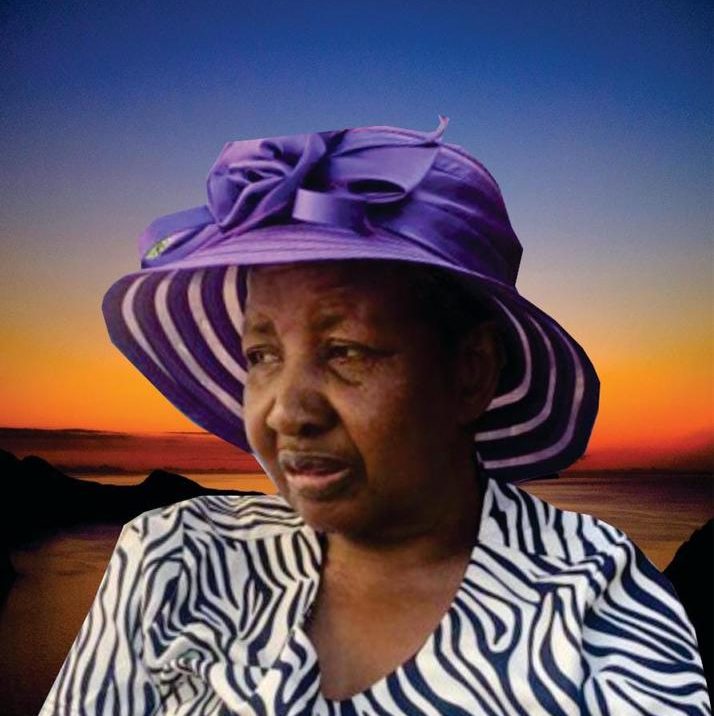
Keep resting in peace dear mum.

Sometimes You Think You Know, Then When You Know, You Realize You Did Not

The third quarter of the year is almost gone. I am amazed by this realization.
When Mum passed, just before the ‘new year,’ I felt 2023 would not exist in my brain. Luckily, I did not receive any “Happy New Year” messages. I do not know how I could have dealt with that. Looking back to this period and the time that has passed since then, there are various lessons I learned first-hand. They are not new lessons; sometimes, they are what I have heard or read about, but they made quite a different impact.

Grief Is Personal and Illogical

My experience may be quite different from how anyone else experiences grief. It felt like a truck of emotions had crushed my head, and I was unsure what to feel. My worst nightmare came true. How would we live in a world where Mum did not exist? It took me back to the previous year when daily routines included care for Mum. I found myself asking, “Were our efforts not enough?”

I do not know why this nagged me so much. There was something in me that felt there should have been a reward in the form of Mum getting a longer life because of our efforts. The calls and regular home visits. Engagement with different medical professionals on an ongoing basis. Even just love. I felt bitter that we deserved better results. We did our best! Our best should count. I wanted to imagine that it would make a difference. Just a few days before, the wound specialist had confirmed that the diabetic wounds that Mum had suffered for over a year, with weekly and later biweekly dressings, were finally healed. I still recall the WhatsApp message he sent me. “Just one more dressing and we are done!” he had said. When she passed, I called him, “Mum did not wait for the last dressing.”
“She wanted to go clean from the wounds,” he responded after a rather long pause.

Grief is not logical or predictable. It felt strange. I felt actual physical pain, and I struggled to breathe. I wondered if something physical was getting separated from my Mum and me. I felt bitter that we had lost Mum, not once but twice. We lost Mum when her memory started failing, and her speech was affected. The mother who always had stories and sarcastic comments could not express herself.

Grief is not logical. When in grief, one can easily make enemies. A wrong word said by a well-meaning person can sting. Some of it can be lasting. I recall when we had just placed flowers on my mum’s grave, and a friend had coaxed me into the sitting room where the family meal was being served. When I was about to sit down, someone asked me and a few “ladies” to take plates so we could serve some guests who had missed food. Luckily for him, he had done a lot, and I could not judge him, and I was too exhausted to react. So, I just told him, “Today I am only taking care of myself,” and he quickly realized his mistake and apologized. There is a world in which he would have become a permanent enemy—words, especially, sting. When you are in grief, it is not a time to be logical. Being very cautious about what you say to a grieving person can determine the future of your friendship.

However Long, It Feels Short

I recall a friend mourning that her dad was only 60 years old; how could he die that young? “He was not yet 70?” she said.
She imagined that if at least he was 70, this could have felt easier. I then shared how my dad passing on at 82 years felt young. I would see men who, in my view, were ‘older’ than my dad and start crying. For my mum, she was heading to 80, and I found myself comparing her with “older women” who were alive or had passed away at an older age. Why could she not have seen 96 years, for example, like one of my grandmas who had passed away the same year? Whenever I see any of her friends, who I imagine are her age mates, I wonder why she died ‘that young.’ Why her?

The long period of illness should have prepared us for her demise. Unfortunately, even a long period of illness does not quite prepare you. I recall feeling like my mum had just been walking on the road and got into an accident. She had ailed for a while. In the last year of her life, she said very few words. I kept wishing by some miracle, she could snap back, and I could ask her some questions and clarify some stories she had told us. I wanted to understand more about her experience living in the colonial era. She used to give us stories of how they had been punished because a colonial chief had been injured. Or how they were made to walk for long hours. I wanted to find out more about that. I wanted to understand the relationship with her parents. I wanted to hear again some of the stories she had told and retold, but I could not. While we had many long evenings of stories with her, a great storyteller, suddenly, it was not enough.

It Is Okay Not to Try

I remember going through grief and getting “practical” advice on what to do, sustaining our family bonds, etc. Well-meaning friends have no idea how this felt like a burden. I was not ready for any ‘burden’ or being responsible for anyone.

Sometimes, it is okay not to try.

I found this quite helpful later. For some time, I did not have it in me to try, to push my energy. I needed some recovery that was not possible with any trying. I sat in the dullness for the first few weeks, grateful for rest.

To motivate people, we often make the mistake of pushing someone to run when they are not ready to sit up. I recall feeling, “I do not have any tactics” to handle this. Nothing that I had known or used seemed enough. I just let me. I took a break—a break from trying. There is a category of humans where it is hard to be in this space with them as they have energy throughout—kids. I do not recall how I related to my son during this time. He is a jolly human being. I think we were good. I do not remember. While I sought counseling, I was not ready for that for some time. I did not have the energy to engage. I honestly have not experienced that level of lack of energy before.

It was mental and physical trying when I finally started, one step at a time. Practically. I recall struggling to walk 1 km. When I could walk 3 km, I was ready to seek therapy. I guess the challenge is to know when to start trying. And that must be the line between stepping back and falling into depression.

Then, one day, I was ready. I was ready to laugh. I could breathe.
And the sun keeps rising and setting. And it is beautiful.


a string snapped

“Those we love and lose are always connected by heartstrings into infinity.” –Terri Guillemets

Sometimes you are holding on to a very thin string. And sometimes, it snaps! 30th December 2022.

The end of the year is usually exceptional for me. Apart from the festive season and a break from the usual routine, this also represents a time to look back, exhale and expect a new year. Christmas 2022 was, therefore, memorable. It was the first Christmas without my nephew Vincent, who passed away in January 2022. I silently hoped we could maneuver this gap and be okay. It was the second Christmas without our dad. Somehow, I thought, “We have done this once before, so we can do it.”

Indeed, it was a wonderful Christmas. Mum, who had been sickly, looked optimistic despite failing health, at least to my eyes. For the first time, I entertained hopes for some miracle and healing. We had a good time with my siblings and their families. Many extended past the time they had planned to spend in the village. I felt like I could start breathing, reclaim my life. After close to two years of dealing with the most challenging period in my family, my dad’s illness and demise, and my nephew’s sudden demise, I was looking forward to “close the year’ and starting afresh. I remember telling some colleagues during the Staff Christmas party how this end of the year was special because I felt I was beginning to breathe.

I had planned my time to take a holiday in the new year, so I was back to work immediately after Christmas break. My last day of work was 30th December, but I completed most of my work and scheduled handover emails and notes on the 29th. Call it a premonition. Early Friday morning, 30th December, I received the devastating news. I was on the phone with my sister-in-law, who stayed home after Christmas.

She told me, “Mum is gone.”

I sought clarity. Which mum?

She must be talking about a different mum because the mum I had just received a video of the previous evening was okay. It could not be. I told myself. I was trying to understand what she meant.

“Sophie, mum passed away,” she repeated.

“What do you mean? Which mum? I don’t understand you?”

“Our mum. Here at home. Mum is gone.” 

Her words made little sense. She had sent a text message early in the morning telling us to pray for Mum. Somehow, this didn’t click, and I decided she had mistakenly sent the text. Possibly an old message that was in the draft?

I had decided not to ask for clarification too early and wanted to wait for dawn. I woke up, dressed for my morning walk, and started the car, sure that it was a wrong message and I would alert her to the same I was driving out. The phone call was not making sense.

“Home where,”

I persisted. She repeated. I was now confused. Maybe she meant that our mum had passed away?

“Mummy Wambui?” I asked. As if I have several mothers.

“Yes,” she said.

I felt like a string that had weakly but persistently been holding me in somewhere deep had snapped. My mum suddenly got worse around 5.00 am and passed on shortly after. When you have had some experience, like the death of a loved one, you know how it feels and how it would be painful. I imagined that I knew how it would feel. I was wrong. I did not know.

I recalled a blog by Bikozulu where he said, “Your mother will break your heart. “

I thought I understood this. Then, it happened to me. Mum was gone, and I did not know that kind of pain existed.

While Mum had been ailing for a while, still, there was something that felt so sudden about her death. I wanted to be ready and prepared when it happened. It was not yet time, I felt. I had imagined a few more years with her, at least. I had imagined there would be an alert, a sign. Some preparations where I would know we had little time left. Something that would alert me that it was time for her to go. Not the sudden news early in the morning.

I didn’t feel like any arsenals I had in my store were sufficient. There was a new world I was trying to navigate, a world without my mother. That was a different universe. When Dad died, I put all my eggs in one basket so that I still have one parent. I lost both my parents 13 months apart. It felt like the fabric holding our family together had broken. All the screws were gone. Is there a family when there are parents? Is there a home without parents? I wondered.

There are several things that I understood at the theoretical and brain level, but at the innermost core, I could not connect. This is one of them. I know families without parents and that parents would not live forever in the best-case scenario. Yes, I knew that in my head, but my heart and soul struggled to understand this.

I wanted to accept that my mum had done her diligent work on Earth. I tried accepting that illness had denied Mum her true self. She had not been herself for the previous three years, but I felt I needed her around just a little more.

What to do when it feels like the umbilical cord is getting forcefully cut off for the second time? What could I do when I felt like a string holding me together had snapped?

There were no easy answers. But the sun kept rising and setting.

Losing a mother is the deepest pain that a heart can experience. About 7 months later, I can now write about this.

Kindness: Rays of sunshine on our paths through life motions

Human kindness is a ray of sunshine

Photo by JOHN TOWNER on Unsplash

In this final part of my reflections on the challenging period when we lost close family members two months apart, my dad and my nephew, I have been reflecting on the excellent community support. I would not be doing justice if I did not mention human kindness in weathering the storms and the lessons learned or affirmed through this period. In African culture, there is immense community support, whether in the village or the cities. My experience in both spaces (i.e., in the village for my dad and in Nairobi at my brother’s house) was excellent community support and human kindness. Of course, the first source of support was from the immediate family. I come from a large family, both nuclear and extended. We come together as siblings in big and small ways, and we did during this period.   We had constant guests and support through it all. I do not have words that would do justice to expressing gratitude for the support we received. The experience was a clear reminder of what it feels like to have others carrying you through when you do not feel like you have the energy to keep at it. On the other hand, I learned many lessons that will be life lessons and improve how empathetic I am in supporting others.

First, please, (on a lighter note) bread is overrated! My experience with bread is back to my university days, as it was the most affordable meal. I ate so much bread that I could not put bread in my mouth for a long time later! Bread is easy! When I think of paying someone an impromptu visit, bread! With bread, one will make tea, and there is a quick meal. But I have not seen as much bread (outside a bakery) as I saw during the mourning period. Everyone brought bread, and nobody wanted to eat bread. Okay, or only half of the people ate bread, and the other half brought enough bread to feed an army. We got so much bread that I will no longer carry bread to a bereaved home. I recall this afternoon when we were on calls, looking for the place to donate the bread, then a different group landed with a whole crate of bread, about 24 loaves of bread. To increase consumption, we tried to coax the bread in various forms, sandwiches. Well, there can be too much bread!

That aside, I reflect on the many lessons I learned during this period. Some were new lessons; others were an affirmation of lessons I may have underestimated.

Sincerity is not enough

I carry this phrase -sincerity is not enough- from an article I read a while back where the author explained that some actions with good intentions have a drastic impact. Sincerity is not always enough; one needs to be sure. I guess the near-equivalent is “ignorance is no defense.” The example in the article was when someone goes to the fuel station, and the attendant puts in the wrong fuel. It does not matter how sincere the fuel attendant was; the car will stall. I know that from firsthand experience when my petrol car got diesel! That story does not end well, but I digress.

I have observed that people’s intent on supporting someone when bereaved can end up causing more harm. At 18 years of age, I lost my older sister. It was the most devastating experience of my young life, and I made some enemies then. I recall an auntie who told me, “there is no crying here.” I looked at her and decided she was happy with her sister’s death. I did not forgive her for a long time. It was possibly over ten years later when I let go of the grudge and started relating to her in a better way. Mostly, or always people do not mean harm but do much damage. I learned different lessons from my experience and from reading books and listening to others on aspects that can cause harm. People fear sorrow and quickly push the bereaved not to express emotions. There is an unsaid rule that we can laugh loudly but should hide tears.

“Do not cry. It is okay.”.

Is it okay? For who exactly? Death is not okay; it never feels okay. It is a given, it must happen at one time, but that does not make it all alright. It is hard. Sad. Shocking. It is not okay. It does not feel okay. People being shushed from expressing emotions is still common. That infringes on someone’s right to express their emotions. In the African context, where community support is expected and often given, death and other events, happy or sad, are a community affair to a large extent. Sometimes in trying to help, one will get it wrong. Empathy is essential, and knowing what to say or do or not to say or do is critical. I appreciate that I experienced support during this period, and I know it is not always the case.

Small and big things matter

I recall this article I read a while back that stuck with me. The author received a devastating call. Her brother, his wife, and the sister’s children had died in a car crash. She needed to fly home as soon as she possibly could leave. As her husband booked flights, she was confused, moving from one room to the other. Then a neighbor came and said he had come to clean their shoes. The neighbor got to work and cleaned and polished every shoe. It may seem irrelevant, but when she needed to pack for her flight quickly, having clean shoes that she could throw into suitcases was important. At that time, she appreciated the clean shoes and the actions of the neighbor who stepped in to help without asking. Somehow that story stuck with me, and during the stormy moments, it resonated with me. A friend calling me to find out how I was or asking me to go for a walk were among the acts of love that made a difference, day by day. A friend took me for a walk, even when I did not feel like getting out of the house. I recall getting surprised at seeing some people I had imagined were only ‘online friends’ during my dad’s funeral or visiting our home. I was touched by the number of relatives and friends who found their way to my brother’s place to condole with us. The financial contributions went a long way. No action was too small to make a difference. The different actions of different people impacted me. I might not have thanked everyone for their kind gestures. But I am genuinely grateful.

A blank cheque may not be a cheque at all.

A black cheque has no signature; it is not helpful. Last year I was reading the book Option B: Facing Adversity, Building Resilience, and Finding joy by Sheryl Sandberg and Adam Grant. The book narrates the experience of Sheryl Sandberg’s losing her husband, Dave Goldberg. She realizes that the first option- Dave- is no longer on the table and needs to find her joy. The book also shares different experiences of people going through adversity. One issue stuck with me, do not ask someone, “let me know if you need anything” or “let me know how I can help.” This is also the title of the article I referenced earlier. While that seems like an offer for help, it burdens the individual to look for the specific ask that s/he can request. It is easier to handle a more straightforward offer. When someone is in a challenging space mentally, making even simple decisions can be daunting.

An example is instead of asking someone, “what do you want for lunch.” They may not feel like eating, so they can easily say “nothing.” But if you narrow the options to “I am at a pizza place, which type do you prefer.” Even going further to indicate some 2-3 options is more helpful. The person may not have thought about eating pizza, but they can suggest one out of three options. And if they say “any,” you can take three different types.

I know it comes from a good space, but the many times when someone said, “let me know how I can help,” and that ended at that. There are those people close enough to us that it is easy to ask as we know how they can support us. One needs to understand some circumstances around you to see what you are able and available to help. For example, I called a friend when my dad passed away when I was in the village with my son and the nanny. I asked her to come to pick them up. She was in my village that afternoon, picked them up, and came back for me the following day. She has done that in the past, dropping my kid and nanny when I am away, so I knew she could easily do it. If she asked what she could do, I could tell her anything that needed action, and she could see to it or ask someone else to. Some friends could easily ask that question, and since I know the lengths we go to for each other; I could blurt out a request without much thought. Some friends offered, and that was very easy. Someone offered to support the purchase and transport of flowers, getting that off my plate. She coordinated and transported them. A friend called saying she was at the supermarket and asked if there was anything specific I needed. Another friend called asking if I needed any errands, and she indicated she was having a flexible day and could run around. I appreciated the specific asks. I have learned to be specific or not offer when I know I am unavailable or unsure of what I can do. Even those who just said, “I am praying for you,” that was enough. Sometimes when people are facing difficult moments, I say, “how can I help” and leave it at that. I have learned this is not exactly an offer for help.

Get involved, and engage whoever matters

In a community setting, gender, and age, among other characteristics, matter. People who are invisible under normal circumstances are even more invisible during such occasions. It is easy to ignore the roles of different people. Sometimes, people who need to be involved are not involved. I recall when I lost a cousin. During the planning meeting, I noted that the mother was aside, not getting consultations as the male members of the family made decisions. I recall stepping in and asking, “but what does the mother want” and asking that she be in the meeting. Some of the men at the table looked at me with eyes that indicated they had not noticed I was there. The women there were quiet, except me. Gender and other inequalities play out in such situations.

During the planning committee meetings, the Late Vincent’s friends approached us and requested to be more involved. We had not intentionally engaged the young people in tasks that mattered. I met with their team leader, asked about the roles they would like to engage in, and suggested what they could support. I must say, these young women and young men left quite a mark! I was impressed by how well they engaged in ‘getting their hands dirty’ and being part of the planning. It is easy to assume that the ‘urban youth’ do not like physical work or engagement. It is easy for young people, children, or women to be invisible on such occasions. I recall how,  the morning after agreeing on the tasks they could engage in; a young woman was at home by the time we woke up and asked what she could do. I thought she could wait until someone went to the market, then she could help prepare meals, but she volunteered to go to the market. The youth were engaged and active in supporting to lay to rest their friend. They engaged in different tasks with so much dedication. I was happy to know my nephew had such friends.

It is not about your personal comfort

When one visits a bereaved family, the intention is, or should be, to ease the pain of the bereaved, not the guest’s personal comfort. While hosting guests is expected, it is upon the guests not to prioritize their comfort. Food can, in particular, be a sensitive issue. I have heard different episodes around food that leave me surprised. I recall someone saying how when he had just buried his wife and left with three children under five, he had no idea what was happening around him. Sitting at a corner, a friend complained that he had not eaten lunch. Could he arrange it?

In another instance, a friend lost her mother at the height of the Covid19 pandemic. At that time, serving food was not happening, and there was a limit to the number of people. While walking back from the cemetery, my friend heard some neighbors complaining. They indicated how the bereaved family has resources and should have provided some cash allowance for the mourners to buy food. While supporting a friend who had lost a loved one, I remember someone fussing about food and eventually taking a plate from my friend, who we had been trying to coax to grab some food.

A while back, eating during mourning seemed forbidden in the Kikuyu culture. It seemed that we would think eating could carry bad luck. Our practices have evolved, and we now appreciate hosting and sharing a meal in joy and sorrow. That does not negate the need to remember it is not the visitor’s comfort. This is one time that hosting is not hosting per se where the host caters to the guests.

One experience stuck with me during the mourning period for my nephew. One person indicated they needed a different snack when serving tea and snacks. When the person serving offered the alternative snacks that were available, the guest wanted another snack.

There is the sunshine of human kindness

Overall, this period rekindled my hope and belief in humanity. Many things happen, good and bad. Sometimes one wonders if human kindness exists, and I know it does. It was humbling to see the extent people went to support us in different ways, and the warmth of humanity makes all the difference. No wonder Covid19 effect was even direr as the social aspect was threatened. Such experiences remind me that I have wonderful people around me. May human kindness give rays of hope in all situations.

A season, or just life (part 2)

When one must, one can. Charlotte Whitton

Sometimes life throws you a curve ball, and you do not know if you have what it takes to handle this. You do not even know if you have the energy to explore how to deal. Sometimes your best defence feels inadequate. But you know that you must strive to do whatever it takes. I found myself in that space, and I realize that when people have undergone a misfortune, the judgment on “they are strong” in handling it is often misplaced. When you must do something, you may get the strength to ‘deal’ with it, but you are just postponing dealing with the impact of the misfortune.

Over the years, I have discovered and explored different coping mechanisms or at least know how or where to ask for help. As I went through the motions of the anxiety of dad’s illness, I benefited from the different coping mechanisms; Prayers, meditation, breathing, long walks in the forest, eating, listening to audiobooks and podcasts, meeting with friends, and venting to a listening ear. I have a good network, and my great girlfriends did not tire of asking how I was doing. The Calm app, in particular, has become my best friend. That helped me maintain a level of sanity. On that fateful November 7th, 2021, Sunday morning, when my dad passed away, I did not feel like I had more arsenal for coping. Or possibly I did, and I went on autopilot as I knew I still had a lot to do and did not have the luxury of sitting back. Sometimes you feel like you have reached the maximum stretch and will break if you stretch further, there is more demand, and you stretch even further. I call it the elasticity of the human will.

It was a difficult period. But the sun kept rising and setting. How strange!

“How can the sun keep rising, as if every day was like any other day?” I often wondered silently.

A friend shared that during the period after she lost her dad, one of the hardest things was when it seemed everyone around her had forgotten this and expected her to be ‘back to normal.’ That was profound and resonated with me. My primary coping mechanism was ‘being practical’ and attending to what needed attention. When we laid my dad to rest, the impact started hitting and sometimes hitting hard. I got triggered by unexpected circumstances. Some, quite ordinary and minor, like seeing an old man and thinking, “my dad was much younger, healthier. Why did he have to die at only 82 years? This man looks close to 100 years.” Or, I could be in the supermarket and see a brand of herbal salt that he liked, and in the process, remember that he could no longer enjoy it. Sometimes it was a major issue like the insurance! That broke me. I could not believe the information they sought, including what I had already provided before, but somehow was not in their records. The insensitivity was on another level. As if that was not enough, my mum needed constant medical care, so only weeks after laying my dad to rest, my mum was admitted to a hospital. But as a family, we kept at it. When you must, you do. Friends and relatives came in handy and continued to support us in different ways.

Soon, 2022 was here, a new year with fresh dreams. After a challenging 2021, I was determined to get over the cloud by January and restart the new year. I said goodbye to 2021 with ‘an attitude. “You were the worst. You and I are done!”. That season was over. Or was it? Sometimes, when it starts to rain, it pours.

I needed a quiet time to restart my year, and what better place than the green, serene Subukia Shrine? I planned with a friend, and we went there for quiet time for two days. It was also a significant time. On that Friday, January 7th, it was exactly two months since my dad passed away. I felt like I had made peace with his death then, and despite having a weird feeling, I was all set to go back to work on Monday. Life must go on. We travelled from Subukia on Saturday, January 8th, 2022.

After refreshing from the journey, I set out for some idle entertainment until one of my sisters called. It was the kind of call where you wanted to find out more information and not pass unclear news. Our family communication chain is ad hoc but efficient. From around 5.00 PM, there were different calls and preliminary reports, and I had established my nephew had been in a road accident. I knew he would be okay, and I reassured my sister that it would be well. How wrong I was. The news of his death came as a blow, and I could not understand what one of my brothers was telling me.

“Apparently, by the time he was rushed to the hospital, it was too late.”
“What does that mean?”

Honestly, I did not understand what “too late” meant.

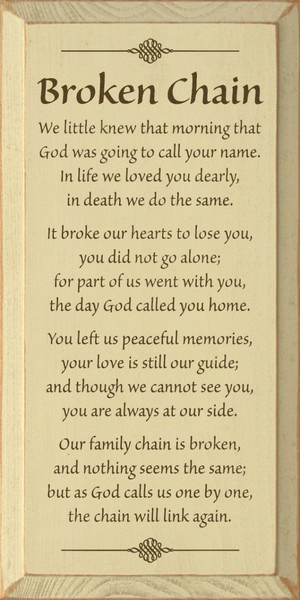
From different corners, in between phone calls, we started making our way to my brother’s place. The agony! I could wish that on anyone. My nephew, Vincent Ngugi, passed away just a day and two months after my dad’s demise. There were, and still are, no words to tell the dad or the mum, and I still do not have any words for them and everyone else. He was only 26 years old. Why? Why? We still ask. Another family chain was broken.

I recall when the young baby graced our household. I remember tagging along to pick him up, then a new-born from the hospital. How could I be writing a tribute for him? We all had and still have more questions and wishes but no answers. The strength that I had thought my quiet time in Subukia had revived in me dipped. Or maybe I needed that to get on with the days ahead.

The sun kept rising and setting!

For our family, it was gloomy. I kept hoping and praying that everyone had a copying mechanism because we were running on an empty tank. We still did what we could to support each other, but that did not seem enough. I recall sitting back and praying that this season is over. I prayed that we have a break from the sorrows and sadness—the losses.

The struggle of coping with loss and having different responsibilities is difficult. Looking for more ‘sunshine’ days was the order of life. We had sailed through the first Christmas without our dad only a few days before. We fondly remembered how efficiently Vincent had taken charge of his younger cousins as we all gathered at home in the village. How could I have known this was the last time I would see him? What words can one possibly tell someone who has lost a son? An older brother? No word seemed appropriate.

It was and still is an ongoing task, trying to sit with my pain and every time thinking, “how do I mourn the two people.” It is hard for the heart to comprehend. I kept hoping the “season” was over, then realized it was not a season but life. Sometimes life throws us curve balls. Some we catch, others we duck, and others, we barely know what direction they are flying from and have no idea how they hit us. Such is life, the thorns, and the roses.

A season, or just life (part 1)

“There is a season for everything under the sun—even when we can’t see the sun.”- Jared Brock.

Some seasons can be so long; maybe they are not just seasons. Seasons come and go. Life, life just is.

Photo by Fabio Jock on Unsplash

A Season of Losses and Lessons

I am surprised to note that the last time I blogged was over one and a half years ago. While the season—or maybe just life—that I have experienced in the past one and a half years usually would benefit from writing, which I find therapeutic, I have not had the energy to try to express my thoughts on ‘paper.’ It has been an extended period. An extended season.

If I were to describe this period, I would call it a season of losses and lessons.

The Day Everything Changed

At the beginning of 2021, the world was still actively battling the impact of COVID-19, wondering when this nightmare would end and looking for vaccines. Life had started changing for my family, but nothing could have prepared me for that Sunday morning on November 7th.

Was it warm or cold? Did the sun even rise? I have no recollection of anything else that morning. What I do remember vividly is my older brother Martin knocking on our door and calling me. His tone was unusual, but I couldn’t quite place what was wrong. My mother always taught us that when someone called, we should go to them rather than asking, “What is it?”

When I walked into the sitting room, my younger sister was already seated next to my brother. They looked somber. He did not say good morning.

“He is gone.”

“What do you mean?”

“Dad is gone,” he repeated.

The words didn’t make sense. My mind struggled to grasp them.

We had been holding our breath for six months, hoping for the best. Just like that, he was gone. And another tough season was beginning.

A Reluctant Patient

Last year, my dad, who had always been the epitome of good health, started ailing. The shift was subtle at first. I do not know when he truly got sick, and I do not think we will ever be able to pinpoint the exact moment.

Dad was never one to dwell on illness. He did not ‘do sick.’ He was also not good at allowing people to take care of him. It became a challenge when he needed medical attention. He would agree to one medical check-up but refuse any follow-ups he deemed unnecessary.

I recall a few years ago when I took him to a doctor. After multiple tests and a long discussion, we secured a follow-up appointment. But when I called to confirm, he was categorical:

“That doctor is taking too much money for nothing. The tests were costly. I will monitor my vitals at the local clinic.”

That was the end of that chapter. It did not matter that we were paying the bills and were not complaining.

So, when he started looking and feeling weak last year, convincing him to return to the hospital was a struggle. He was assertive, and if he refused, there was little we could do except wait for another opportunity—usually when the pain became unbearable. If he ever asked to be taken to the hospital, we knew it was serious.

The Silent Battle

The first time he was admitted last year, my brother, who had taken him, refused to bring him home. Dad reluctantly agreed to stay. The second time, only a month later, he didn’t even wait for the doctor’s discharge—he simply decided he was leaving.

By the third admission in September, things had changed. He had lost significant weight, barely ate, and required frequent blood transfusions. The oncologist suspected cancer. It was then that we began hearing the term “Gastrointestinal Stromal Tumor (GIST).”

I recall the oncologist telling me, “Sophie, just stop asking Dr. Google; ask me.” But we couldn’t help it. We were desperate for answers, desperate for hope.

What I cannot reconcile is how my dad, the most disciplined person regarding diet, got digestive system cancer. We will never understand. Maybe there is nothing to understand—only to accept.

The Final Days

Going home became more urgent and frequent. That Saturday, November 6th, I travelled home knowing he had been having a bad week. We debated whether to take him to the hospital, but there was no clear reason. He had just started on targeted therapy, and the doctor was due to see him on Monday, November 8th.

When I arrived, he was sleeping. But later, he woke up and spoke with my sister and me. He looked better. He had managed to eat a little, and some of his symptoms had eased. For the first time in a long time, we felt reassured.

We were wrong.

The next morning, he was gone.

I still see my chat history with the doctor from November 5th, updating him on Dad’s progress and confirming his appointment for November 8th. But he never made it to that appointment. Instead, he went for another one—one none of us knew about.

Living with Loss

Coming to terms with the loss was, and still is, difficult. I don’t think one ever fully does. December was a struggle. We were entering the season of “firsts”—the first Christmas without Dad, remembering the last one with him.

By the end of the year, I was determined to find the energy to restart. Grief doesn’t follow a timeline, but I held on to the hope that the season of holding my breath was behind me. While grief lingers, I was ready to step into another season.

This has been a season of losses, but also a season of lessons. Lessons in love, in family, in resilience, and in the unpredictable nature of life.

I don’t know what the next season holds, but I am stepping into it with hope.

Even if I could not see the sun, that season was over. Or was it?

The problem out there

Every time you think the problem is ‘out there,’ that very thought is the problem.

Stephen Covey

It has been a difficult one year plus. The first time that news started spreading that there was a certain virus causing havoc in China many of us treated this as “their problem”. The problem out there? I mean how is China problem my problem? We have problems of our own in Kenya.  We forgot one thing. It is a global village. That is one thing that the virus has proven just how interconnected we are. Considering that everyone who has contracted the virus must have come into contact another human being infected with the coronavirus, it is profound just how social human beings are, how much we interact.

Shortly the virus started spreading in Europe and US, and we started thinking “it is a white person’s problem”. When the information about COVID-19 was scarcer, I recall discussing with some colleagues and thinking “well… this virus is not affecting African countries.”.  In fact, I recall us saying “it is more among men. white, and older. So, us young(ish) black women must be safe!”   I kept wondered why our organization was flagging international travel to be halted when we could still do our workshops in African city.

Shortly we heard there was a confirmed case in Africa, in Egypt. “Well, this is not East Africa; and the infected are not Africans”. And the denial continued. By this time with the ongoing communications in my organization I had started accepting COVID-19 reality and I sounded like a pessimist in my circles when I kept talking about this not well-known virus. Sometime in March last year, I had a dream. Yes, a dream. There was a COVID-19 outbreak in Kenya, and we were all in masks. I was going to see a friend in hospital with many people sick. I shared with some friends my fear and they quickly dismissed; I mean that was the most logical thing to do. “We keep up hope, this virus will not come to Kenya”. And keep up hope we did. The virus was still “out there”. Two days later the cabinet secretary for health gave the breaking news “first case of COVID-19 had been reported in Kenya”! And that was when reality started sinking. Nobody was safe.

But well, there was still hope. Those travelling were the ones getting the virus. I recall hearing some justifying that those of us with passports deserve to get it more than those who had never been outside the borders. After all, “this was a foreign virus”. I was grateful that unlike previous years, 2020 had limited international travels planned for me. Part of what I had desired in 2020 was to travel less! Oh, the prayer was answered! And not in the way I had expected. Simply zero travel.

Shortly after we started getting the “community transmissions”. Well, that was a “Nairobi and Mombasa problem”! Many said. Others were even more specific, that this was a problem of “the rich people in Nairobi”.  When some measures were put in place, to curb the virus early last year including curfews and cessation of movement in and out of Nairobi there was a kind of division with “Nairobians keep the virus to yourselves” mantra.  Eventually, the virus infection was reported in all counties in Kenya. People in the village started hearing of someone infected or dying of the COVID-19.

We are now at the “third wave” and seeing online posts can be depressing seeing many mourning losing loved ones to COVID-19. Also hope seeing others praising God that finally they are out of hospital. Many are still struggling for oxygen in hospitals. The “problem out there” has become a problem in every household, among friends, among colleagues and neighbors. I am not sure anyone can say they do not personally know someone who has been infected with the virus. Unless in denial, highly unlikely. This does not mean the attitudes have transformed… there are still denials and possibly the thinking that “it is out there I am safe”.

We do not know how long this quagmire will last. And it is not unique to COVID19, many times we dissociate with issues, refuse to address them because we think it is a problem out there. As Stephen Covey puts it, thinking it is a problem out there is actually the problem. When you think an issue does not impact you, then you will not contribute to bringing a solution to address it. As the Kiswahili saying goes Mwenzako akinyolewa wewe tia maji. (meaning when your companion is being shaved, put water (on your head), be prepared for the same fate as your companion). As long as we are on this earth, we have a role, in making life a better place, and making contribution to resolving /addressing problems before they escalate and even if they do not personally affect you. I think that is the humane thing to do. Caring about what happens to your neighbor, is part of caring for yourself.