A season, or just life (part 1)

“There is a season for everything under the sun—even when we can’t see the sun.”- Jared Brock.

Some seasons can be so long; maybe they are not just seasons. Seasons come and go. Life, life just is.

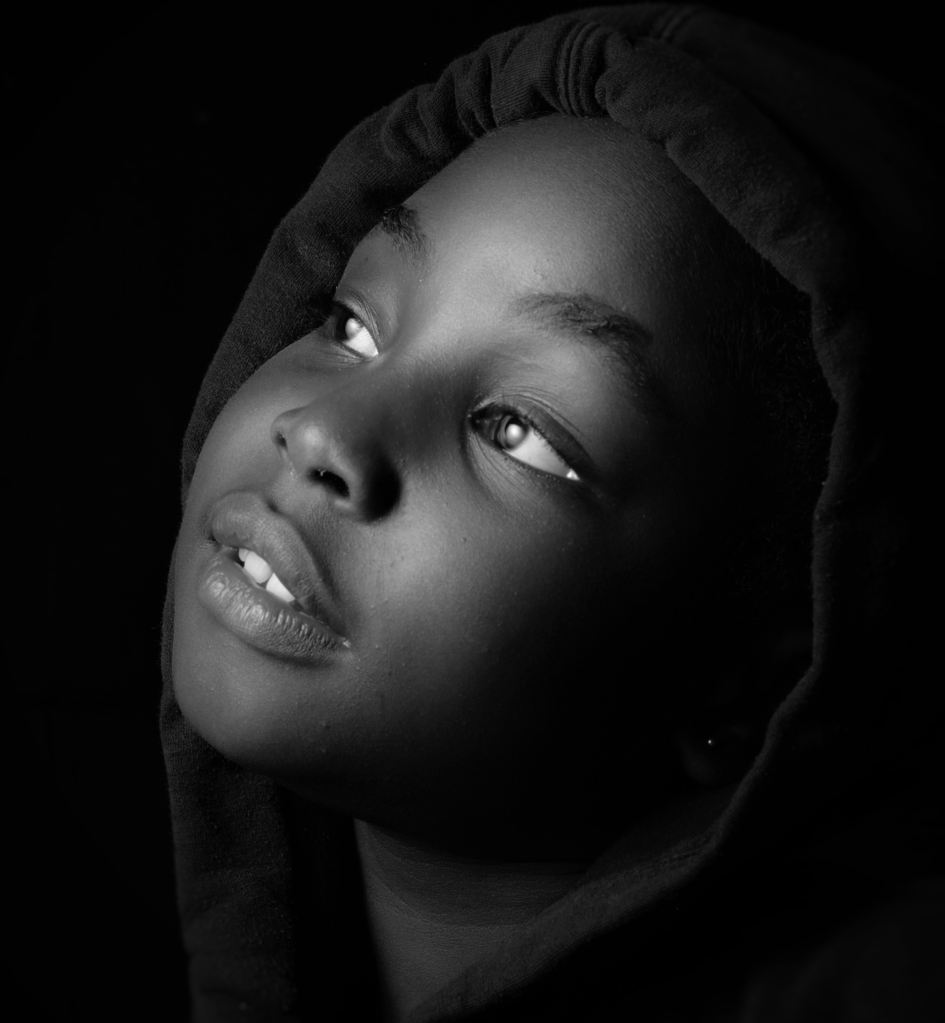
Photo by Fabio Jock on Unsplash

A Season of Losses and Lessons

I am surprised to note that the last time I blogged was over one and a half years ago. While the season—or maybe just life—that I have experienced in the past one and a half years usually would benefit from writing, which I find therapeutic, I have not had the energy to try to express my thoughts on ‘paper.’ It has been an extended period. An extended season.

If I were to describe this period, I would call it a season of losses and lessons.

The Day Everything Changed

At the beginning of 2021, the world was still actively battling the impact of COVID-19, wondering when this nightmare would end and looking for vaccines. Life had started changing for my family, but nothing could have prepared me for that Sunday morning on November 7th.

Was it warm or cold? Did the sun even rise? I have no recollection of anything else that morning. What I do remember vividly is my older brother Martin knocking on our door and calling me. His tone was unusual, but I couldn’t quite place what was wrong. My mother always taught us that when someone called, we should go to them rather than asking, “What is it?”

When I walked into the sitting room, my younger sister was already seated next to my brother. They looked somber. He did not say good morning.

“He is gone.”

“What do you mean?”

“Dad is gone,” he repeated.

The words didn’t make sense. My mind struggled to grasp them.

We had been holding our breath for six months, hoping for the best. Just like that, he was gone. And another tough season was beginning.

A Reluctant Patient

Last year, my dad, who had always been the epitome of good health, started ailing. The shift was subtle at first. I do not know when he truly got sick, and I do not think we will ever be able to pinpoint the exact moment.

Dad was never one to dwell on illness. He did not ‘do sick.’ He was also not good at allowing people to take care of him. It became a challenge when he needed medical attention. He would agree to one medical check-up but refuse any follow-ups he deemed unnecessary.

I recall a few years ago when I took him to a doctor. After multiple tests and a long discussion, we secured a follow-up appointment. But when I called to confirm, he was categorical:

“That doctor is taking too much money for nothing. The tests were costly. I will monitor my vitals at the local clinic.”

That was the end of that chapter. It did not matter that we were paying the bills and were not complaining.

So, when he started looking and feeling weak last year, convincing him to return to the hospital was a struggle. He was assertive, and if he refused, there was little we could do except wait for another opportunity—usually when the pain became unbearable. If he ever asked to be taken to the hospital, we knew it was serious.

The Silent Battle

The first time he was admitted last year, my brother, who had taken him, refused to bring him home. Dad reluctantly agreed to stay. The second time, only a month later, he didn’t even wait for the doctor’s discharge—he simply decided he was leaving.

By the third admission in September, things had changed. He had lost significant weight, barely ate, and required frequent blood transfusions. The oncologist suspected cancer. It was then that we began hearing the term “Gastrointestinal Stromal Tumor (GIST).”

I recall the oncologist telling me, “Sophie, just stop asking Dr. Google; ask me.” But we couldn’t help it. We were desperate for answers, desperate for hope.

What I cannot reconcile is how my dad, the most disciplined person regarding diet, got digestive system cancer. We will never understand. Maybe there is nothing to understand—only to accept.

The Final Days

Going home became more urgent and frequent. That Saturday, November 6th, I travelled home knowing he had been having a bad week. We debated whether to take him to the hospital, but there was no clear reason. He had just started on targeted therapy, and the doctor was due to see him on Monday, November 8th.

When I arrived, he was sleeping. But later, he woke up and spoke with my sister and me. He looked better. He had managed to eat a little, and some of his symptoms had eased. For the first time in a long time, we felt reassured.

We were wrong.

The next morning, he was gone.

I still see my chat history with the doctor from November 5th, updating him on Dad’s progress and confirming his appointment for November 8th. But he never made it to that appointment. Instead, he went for another one—one none of us knew about.

Living with Loss

Coming to terms with the loss was, and still is, difficult. I don’t think one ever fully does. December was a struggle. We were entering the season of “firsts”—the first Christmas without Dad, remembering the last one with him.

By the end of the year, I was determined to find the energy to restart. Grief doesn’t follow a timeline, but I held on to the hope that the season of holding my breath was behind me. While grief lingers, I was ready to step into another season.

This has been a season of losses, but also a season of lessons. Lessons in love, in family, in resilience, and in the unpredictable nature of life.

I don’t know what the next season holds, but I am stepping into it with hope.

Even if I could not see the sun, that season was over. Or was it?
The problem out there

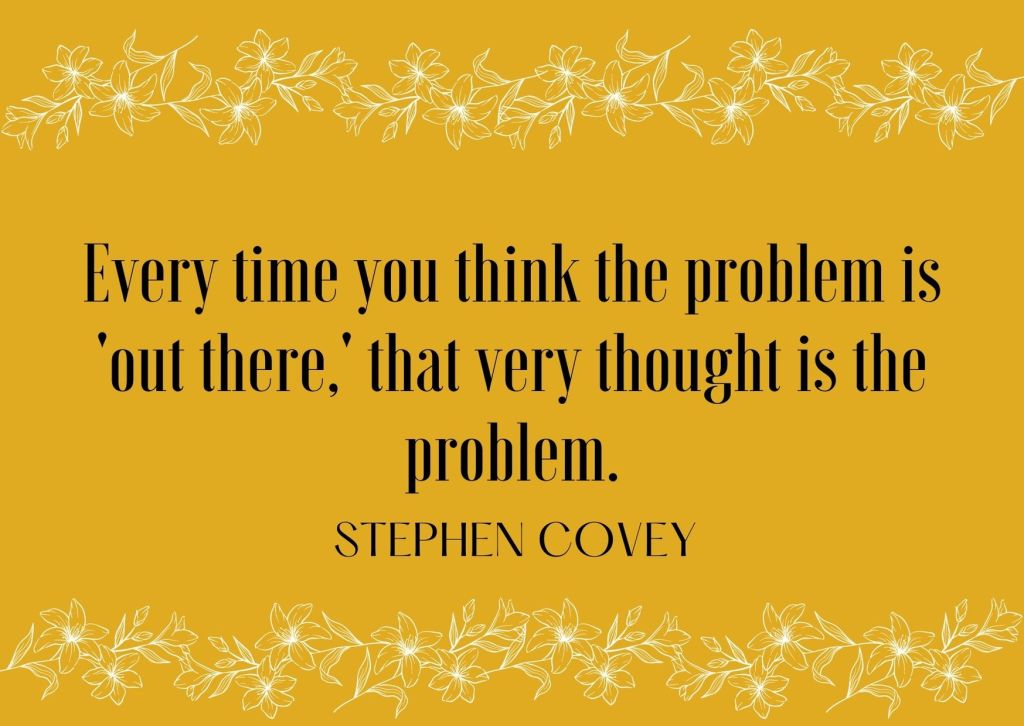
Every time you think the problem is ‘out there,’ that very thought is the problem.

Stephen Covey

It has been a difficult one year plus. The first time that news started spreading that there was a certain virus causing havoc in China many of us treated this as “their problem”. The problem out there? I mean how is China problem my problem? We have problems of our own in Kenya.  We forgot one thing. It is a global village. That is one thing that the virus has proven just how interconnected we are. Considering that everyone who has contracted the virus must have come into contact another human being infected with the coronavirus, it is profound just how social human beings are, how much we interact.

Shortly the virus started spreading in Europe and US, and we started thinking “it is a white person’s problem”. When the information about COVID-19 was scarcer, I recall discussing with some colleagues and thinking “well… this virus is not affecting African countries.”.  In fact, I recall us saying “it is more among men. white, and older. So, us young(ish) black women must be safe!”   I kept wondered why our organization was flagging international travel to be halted when we could still do our workshops in African city.

Shortly we heard there was a confirmed case in Africa, in Egypt. “Well, this is not East Africa; and the infected are not Africans”. And the denial continued. By this time with the ongoing communications in my organization I had started accepting COVID-19 reality and I sounded like a pessimist in my circles when I kept talking about this not well-known virus. Sometime in March last year, I had a dream. Yes, a dream. There was a COVID-19 outbreak in Kenya, and we were all in masks. I was going to see a friend in hospital with many people sick. I shared with some friends my fear and they quickly dismissed; I mean that was the most logical thing to do. “We keep up hope, this virus will not come to Kenya”. And keep up hope we did. The virus was still “out there”. Two days later the cabinet secretary for health gave the breaking news “first case of COVID-19 had been reported in Kenya”! And that was when reality started sinking. Nobody was safe.

But well, there was still hope. Those travelling were the ones getting the virus. I recall hearing some justifying that those of us with passports deserve to get it more than those who had never been outside the borders. After all, “this was a foreign virus”. I was grateful that unlike previous years, 2020 had limited international travels planned for me. Part of what I had desired in 2020 was to travel less! Oh, the prayer was answered! And not in the way I had expected. Simply zero travel.

Shortly after we started getting the “community transmissions”. Well, that was a “Nairobi and Mombasa problem”! Many said. Others were even more specific, that this was a problem of “the rich people in Nairobi”.  When some measures were put in place, to curb the virus early last year including curfews and cessation of movement in and out of Nairobi there was a kind of division with “Nairobians keep the virus to yourselves” mantra.  Eventually, the virus infection was reported in all counties in Kenya. People in the village started hearing of someone infected or dying of the COVID-19.

We are now at the “third wave” and seeing online posts can be depressing seeing many mourning losing loved ones to COVID-19. Also hope seeing others praising God that finally they are out of hospital. Many are still struggling for oxygen in hospitals. The “problem out there” has become a problem in every household, among friends, among colleagues and neighbors. I am not sure anyone can say they do not personally know someone who has been infected with the virus. Unless in denial, highly unlikely. This does not mean the attitudes have transformed… there are still denials and possibly the thinking that “it is out there I am safe”.

We do not know how long this quagmire will last. And it is not unique to COVID19, many times we dissociate with issues, refuse to address them because we think it is a problem out there. As Stephen Covey puts it, thinking it is a problem out there is actually the problem. When you think an issue does not impact you, then you will not contribute to bringing a solution to address it. As the Kiswahili saying goes Mwenzako akinyolewa wewe tia maji. (meaning when your companion is being shaved, put water (on your head), be prepared for the same fate as your companion). As long as we are on this earth, we have a role, in making life a better place, and making contribution to resolving /addressing problems before they escalate and even if they do not personally affect you. I think that is the humane thing to do. Caring about what happens to your neighbor, is part of caring for yourself.

Women, hair politics and choices!

A woman who cuts her hair is about to change her life – Coco Chanel. 

Marvelous things happen in the bathroom! Whether taking a shower or in a bathtub or using a basin, it is the one place where there is a high likelihood (likelihood 😊) of being alone in your thoughts. Many of us read and check phones while in the toilet, but that cannot happen in the bathroom unless you are soaking in a bathtub over a glass of wine. Well, I digress. Let us just say that when water is running down your body in a shower, many brilliant talents get nurtured, and many will only dare to sing when they are in the shower. For me one Saturday morning in September 2020, while water was running down my head, through my sister-locked hair, I had an aha! Moment. “Why not cut this hair?! Wait, yes! I could shave this hair and not worry about re-tightening. Just like that, I decided. I am quite a decisive person and I can decide at the spur of the moment and rarely have regrets. Or as we say in Kiswahili, kama ni mbaya, mbaya (If it is wrong, too bad) The physical distancing and masks among other recommended behaviors around COVID-19 had made life more challenging. As the cabinet secretary for health repeatedly said, we can not afford to “live normally or the virus will treat us abnormally”. I had struggled with hair management and even considered a DIY (do it yourself) but realized this is not my skill. The loctician used tocome to my house, but that was no longer a straightforward decision for me. After agonizing that week on how best to plan to have my hair re-tightened, the bathroom moment felt like getting out of slavery. Why was hair holding me at ransom?

It was a simple decision for me to make. However, what was interesting were the reactions I received. Most people got surprised or annoyed at My decision to cut My hair. Notable outliers were my 11-year-old niece Bakhita and my friend Rahma. It excited Bakhita that her aunties (my younger sister joined in the decision 😊) had cut hair, like her. She had the most beautiful long hair when one day about two years ago; she stepped out of a salon into a barber. (Let the records show I in no way influenced that decision). She has never turned back! She attempted last year, then decided her short hair was more peaceful. Rahma amused me “I have seen your hair in all stages. Long permed hair, in braids, in traditional locks, short natural, in sister locks and now even shorter. It has been nice in all phases.” Well, it is true my hair has seen different days.

The reactions got me thinking, why is there such politics around women and their hair? Why should hair decisions, especially cutting hair, be an issue that requires a hair-steering committee? I reflected on my experiences with hair growing up.  

Having long hair was an important measure of beauty and as young girls, we were socialized to believe that hair, long hair represents beauty and girls needed to “look beautiful” however much pain it took. Having short hair meant you were “like a boy” who wanted to be a tomboy? This is in a community where taking care of the same hair was a task and an expense that was not a priority. The irony.  Our typical African hair was kinky and tough. It needed a lot of TLC which was difficult to get. We would make small knots and use thread to make it just a little bit soft and manageable. This made little difference, coarse is an understatement! To straighten the hair, we would use a tin that had holes percolated at the bottom and use hot charcoal as the ‘blow drier’ and cooking fat as the hair oil. Woo unto you if (or rather when) the smaller hot coals fell into your head!

The school required you to be “neat” hence a need to undo and plait the hair often. It was hard to get someone to make the hair as there were few hair salons but also, there was no budget to pay for such ‘nonessentials. You depended on the goodwill of your mother or older sister or neighbor if they had some basic skills in this. Many times, my mother would get annoyed at this task and threaten to shave your hair. It was a genuine struggle and among many other tasks she had, maintaining hair of her daughters was a tough call. Other times I recall my auntie coming to visit and helping to plait the hair. When you were lucky to have your hair plaited, you endured all the pain! Not a wince or you would get threat of facing a pair of scissors that was always within reach. No pain, no gain.  

We knew that very well, so you sat in between the legs of whoever was plaiting you and tried not to wince and persevered. Other times after roaming around holding the wooden comb and no success my mother would take a pair of scissors and quickly shave off the hair! That was traumatizing! You felt like a piece of you had been cut off… yes actually apiece of you(r hair) had been cut off and in a haphazard style. One desire growing up was being able to make decision about your hair and having long hair.

High school represented another journey into the hair political movement. There were chances that you joined a high school where long hair was not allowed! Even some primary schools have rules as to how your hair can be made including if to have locks or not! I was happy that my alma mater Alliance girls (I went to… lol) allowed long hair. Too date the rule remains, having hair open on Sundays and only up to eight plaited lines. I saw different journeys of hair in high school. Some girls who came with about 1 inch or hair had long hair falling down their shoulders by the time they finished high school. The struggles of maintaining the hair continued as this is in a cold environment so having open hair did not work for all hair types. However, there was more power in decision making as some girls plaited for a fee or free of charge and it was easy to get the basic products for hair when in high school. More so it meant you could make decisions about your hair and cutting was no longer a threat. Come university and the freedom was more! With more pocket money for the first time, I permed my hair! That was an exciting hair moment. I could finally afford the products and could watch my hair take different shapes, curls, and waves.

After campus and into young adulthood, the hair politics changes, it was now more of what I desired more than what I could afford. I maintained my permed hair until I turned 40! I am not sure if it was the 40’s and pregnancy or a combination but or the first time I made a decision to shave my hair to the shortest length I had had since primary school. It was interesting to see my head in short hair. That was also a moment for me, for some reason it was like “breaking lose” and breaking the rules.  Since then, time my hair has seen more phases and styles! I even had traditional locks (aka dreadlocks) for about 8 months that I untied. I then had sister locks since January 2019. Now in July 2020, let us say… I have shortest hair I have ever had since teenage. Ah now in braids 😊.

Hair for women tend to have many ‘political’ connotations. In some cultures, a woman can not shave her hair unless there is mourning. In others, there is relation to spirituality. In some cultures and religions hair is covered. It represents some cultures for example traditional locks. Hair is also economic venture! Some women can not make ‘radical’ decisions without consulting their significant other.  In some cultures, children get hair shaved at a certain age as a ritual.

Well, it is never “just hair” there is a lot of politics on hair.

The girl that I knew


She was only 13
Or maybe she was or 12, or 14 or 15 years old
It does not matter,
Oh it matters
She was a child

I knew her as a class mate.
An older girl, I thought.
Sometimes I admired the older girls
They seemed to have more confidence
Or maybe not
Tishala was not very confident
The teachers made fun of her
She was not “bright enough” in class
The boys made fun of her,
She was not ‘cool’
Classmates avoided her
She was smelly
Her confidence waned
Poverty did not allow her to afford good perfume
Or water to bathe everyday
Or clean underpants every day
And who took care of her?
Did everyone not see
She was a child

Tishala is pregnant!
Tishala is an embarrassment
How could she get herself pregnant?
Everyone seemed to ask
I got confused,
I did not realize anyone can get themselves pregnant!
Rape.
Abuse.
Violence
Those terms were never used
She was to blame
Despite that she was a child.

The girl I knew,
Was a friend.
I did not visit her home,
or meet with her parents
But she was a friend
We were in the same class
Only that mattered
And she had a good heart
She made me laugh
That is all that mattered for friendship
I was a child
She was a child
Our friendship was easy
For we were children

Years later, realization dawned on me
She did not get herself pregnant
May be she was raped
Or maybe she was sexually exploited
In exchange for some perfume
Why did nobody mention this possibility?
Why did nobody treat her as a child?
Why did she lose her right to education?
Why did nobody mention
That she was a child

This year as we commemorate #16daysofactivism
I dedicate my thoughts to girls like Tishala
Girls who lost their life’s dreams without any support
I stand with her
I stand with girls struggling to claim a space
I stand with girls abused and rejected
I stand with girls who do not have someone to tell them
You are a child!

This girl that I knew,
Motivates me to do my part
She never escape my mind
It has been so many years
She is now an adult
Possibly with daughters of her own
Or grand daughters
For their sake,
I wake up each day
Determined to do my part
To make my little contribution
In the life of such girls
And to get inspired by the power of girls
I stand with her
For
She
Is
A
Child
And deserves to be treated
As a child

Sophia Ngugi, 2019

Share your commitment to stand with women on @WorldPulse: https://www.worldpulse.com/istandwithher
IStandWithHer #16Days #LogOnRiseUp

Her tomorrow, brighter than today

I quickly looked up from my phone to meet the deep gaze of this young girl. She hesitated at the door, then stepped in. Uncertain but bold steps. She looked fearful. She must have wondered why she had been summoned to the head teacher’s office. I saw myself in her. I saw many girls that passed through that school for years. The colors of the school uniform had not changed. I was reminded of how timid I was at her age.
“How are you? I greeted her as I extended my hand. She shook my hand, smile almost appearing on her face, then it was gone.
“Fine” she whispered barely audible.
I looked at her torn sweater. Her creased dress. Her fearful face, almost teary. I was there for a positive mission, but it was not easy to get a smile on her face. Her voice quivered, and I wished I can hug her, but the hand shake seemed to have been quite a task for her, I gave her the personal space she needed. Listening to her narrate her day almost brought tears to my eyes. But I have learnt to not show pity when there are tears in the heart. She needs to see hope not pity. I smiled encouragingly, as I listened to her talk about her daily chores. She is not just a statistic, she has a name, a face, a life but let me call her Imani. Imani is a Kiswahili word for faith. Looking at her it struck me that those deep eyes reflect not just sadness but a lot of hope and faith that tomorrow holds a better future.
This girl struck me deeply because I can see myself about 30 years ago, wearing the same color of uniform in the same school. My mission to my Alma Mater Mang’u Primary School in the rural Kiambu County in Kenya is not a task but a personal mission that I take seriously. I have walked and driven into the school gates with different categories of individuals, some not from the area at different times over the past ten or so years, and sometimes alone. Interacting with the girls and boys gives me different perspectives and every encounter leaves a mark. May be they think I am doing them a favor in mentorship, but I often feel it is the other way round, I am getting a favor of engaging with these girls and boys and sharing in their space, in their dreams. While different social and economic aspects leave the girls and boys in this and other public rural primary schools disadvantaged, the life of a girl remains precarious. Imani represented to me is the face of the girl in that school and other girls in the rural Kenya. It reminded me of the life I had as a girl and how other girls, now women experienced life back then. I kept reflecting on realizing how lucky I had been.
Imani wakes up early in the morning to prepare her younger sister for school. She is the eldest child at home at only thirteen years old. She clarified that she is not the eldest as her 21 year old sister is married with two children and her older brother is away from home. In a rural household, there is always an ‘acting first born’. As a girl she takes over the roles of her mother sometimes. In Imani’s case, she is lost her mother at a young age, so she takes over the roles more times than not. Her father struggles to provide for the family and performs many of the traditional female gender roles. On many occasions, he wakes up and leave the house at the crack of dawn to seek the casual labor. He has no regular income, and the casual labor is often on the basis of “first come” so he needs to be there very early to ensure he gets a job. If he gets some work, he is assured of food for the family that day. Some days he is not lucky. Imani and her siblings have learnt to take a day at a time. They do not complain if there is no food.
Well, hunger knows no boundaries, and for a young person the pangs must be even more severe. How can such a young girl learn to ignore hunger pangs? I silently wondered.
“Well, sometimes there is only so little that I give my younger siblings and a little to my father so that he gets more energy to back the following day to seek some employment’ She added, her face looking more mature than her thirteen years.
She fumbled with her hands, a young girl who has had to grow up too fast and already prioritizing other persons’ needs. Her future is pegged on decisions around her life and accessing education is one core need. It becomes tricky when her access to education is compromised or made difficult by experience in school, at home and her immediate environment. This is the story of many girls her age and the seemingly minor decisions can change their lifetime forever. Imani’s life can pan out very differently depending on the opportunities that are accorded her.
I reflected back on girls I schooled with, and how some decisions changed the course of their lives. The earliest recollection I have is of this girl who was my classmate when we were in lower primary. Many years later, the image is still vivid because I was somehow linked in her story. We were about eight years old. A boy from the neighborhood was sent to pick me from home back to school. In the lower primary, we used to be in school until 1.00PM. My mother wondered what was the problem and the naughty boy said he did not know as he smiled sheepishly. I put back my uniform and ran back to school. I was summoned by a group of three teaches who asked me if I had taken money from the teacher’s purse. This girl who I will call Riziki had said that she saw me put my hand in the teacher’s handbag during break. I could not believe my ears! My head felt very hot and I burst out in tears. My family did not have any allowance for vices like stealing. It was the first time someone looked at me on the face and accused me wrongly. When I look back I believe the teachers knew she was cheating because they quickly dismissed it and concluded I was innocent. I do not recall what proof was there or Riziki admitted to it, but what I recall is how she was paraded in front of the whole school. Her mother was called and she went ahead to disown her and cane her in front of the whole school, “as an example to other kids“. The mother literally disowned her and allowed for boys to taunt her. It was the ugliest scene I had ever seen. I cried along with her, despite the fact that she had accused me. That was the last day for Riziki to be in school. I do not know what became of her, but I know life was not kind to her after that. She lost her dreams of making it in life, just because of one mistake. Was the money worth her lifetime dreams? I still feel bitter when I recall this incident.
I recall in teenage years, girls who dropped out of school due to pregnancy or embarrassment related to adolescent changes especially monthly period when they stained their dresses. It aches when I realize that those girls were around 13 or 14 years. At no time did the issue of them being children and having being sexually abused get a mention. The girls were termed as being “bad girls.” I recall countless number of girls who dropped out.

When I look back, I realize that I and several other girls narrowly escaped and many girls are not that lucky. Decisions by caregivers, parents, families, teachers and their own decisions and choices shape their future. I hope to walk with Imani a few more steps. I do not know what the future holds for her. I do not know what the future holds for the African girls. I do not know what the future holds for the girls in the world. What I know is that we have responsibility to walk with the girls, and enable them be the GirlForce: Unscripted and Unstoppable and with that ensure that there is sunshine in their future.
I celebrate the girls who are waking up and finding a tiny smile, whatever their circumstances. I know they have what it takes to make a very bright tomorrow possible and create their feminine chiefdom. GirlForce: Unscripted and Unstoppable! Like my friend AW like saying, Girls rule the world!

TIRED. I am tired.


Only two things are infinite, the universe and human stupidity, and I’m not sure about the former”. Albert Einstein

I am so tired.

For quite some time I have not blogged. Blogging helps me unwind and it does not mean there have not been many things I want to unwind on. In fact, there has been too much, I am just tired. It takes me back to many experiences I have encountered and more, in particular, this young woman…

Many years later, I keep thinking, what happened to her life? Some experiences stick in the mind for years to come.

I have worked on different programs in the social work field, and encountered many women and girls, with diverse experiences. This girl comes to mind ever so often, because I feel like I let her down. I was a fresh graduate from college in my first job. It involved engaging in life skills sessions aimed at preventing HIV infections among young people. It was in the early 2000s when the rates of HIV infections was quite high and many cases of orphaned children. I was not trained in counseling then and obviously felt inadequate. Maybe I am starting with a disclaimer to explain my inaction, or my “not enough” action. While doing the life skills education sessions in one school, this girl came to me. . Let us call her Lakeisha. She wanted to share her experience and seek support. She was being sexually abused by her uncle. The uncle was a pastor, ‘well respected’ man in the village. Lakeisha was about 16 years old, in high school and an orphan. Following her parents’ deaths, the uncle had been ‘generous’ enough to take over paying school feels for her and her siblings and their upkeep. She was the first born and with four other siblings. The uncle was the well-off person in the family and they depended on him for their daily ‘bread’. Did I mention he was a pastor, and ‘well respected’ in the family and community?

With the little I knew then, I explored with her what options she had. Her main worry was that (1) nobody will believe her and (2) her siblings will be thrown out to the streets. What options did this young girl have? I spent some time discussing with her and she felt her options are non-existent. Her auntie was an only option and we explored if she could tell her auntie. However, she was not sure how this would work out since the only safe space was her maternal auntie who may have been seen to be interfering. She was not able to take the four children in as she was struggling herself. This girl had really thought about her options and felt stuck. We explored and I was feeling more and more desperate as the options became less and less. By the time we parted she wanted me to follow up with her but that was not possible. I was not likely to go back to that school. I suggested to refer her to someone that could walk with her but she was not comfortable with this or to speak with her guidance and counseling teacher. In other words, by the time I left her, there was no end in sight or a good enough avenue for her to explore.

Over 15 years later, Lakeisha crosses my mind. What happened to her? Did she finish high school? Did the violence stop? Did she ever report? Did anyone believe her? Is she even alive? What about her siblings, did the younger sisters fall victim to the same? Was the SILENCE EVER BROKEN? How many more girls was this man abusing? I feel sad even as I write this.

The reason this come sot mind so strongly right now is because of what has been happening in Kenya of late. It is clear that material and financial support is becoming a justification for much evil and this is specifically when women are the recipient. It is clearly misogynist thinking. It is the same thinking this man had to sexually violate his niece. He was paying school fees he had rights over her body! Many are wondering why this is a “gender issue”.

Stay with me in case you are wondering.

I am tired of what is happening in my country Kenya and many times as I try to put something down, words will fail me. I start and stop. I feel I do not have enough energy to engage in the issues. Since last year, there have been so many cases of women murdered by intimate partners. It is like every day you wake up to a new story. They have become stories. Statistics. Sensational past times that we engage in and forgets. Data. Stories that are told retold and we move on. They make news and headlines and then we move on. Even grosser, some people think it is something fun to do a ‘fun challenge’ around it! It is insanity. Is this what Albert Einstein had in mind when he said that humanity has a large threshold for stupidity? I cannot start to summarize the ‘stories’ that have been prominent in the recent past. Just thinking about it makes me feel so tired so I have been quiet about it. I feel like shouting at the top of my voice then wonder who is listening. I read comments on social media and I lose the desire to live in the country. Maybe if I disengage from Kenya it will hurt less?

As I was speaking to a group of women yesterday, and giving them an assignment to journal their experience I found myself questioning my writing block as I spoke. I have not been able to write, every time I think of writing I get too angry to put anything down. I decided to put action into my words. I am trying to find words on something that is so annoying it eats at my core.

This is what is most annoying. The script is the same.

A woman is murdered by a man known to her. Or the suspect is a man known to her. The stories that are spewed start justifying the murder on several stereotypes.

She asked for it…

One would think that by 2019 we have got over this. Blaming the woman. But no. All the cases involve blaming a woman for the murder. She is to blame because in one way or the other she provoked the man. He did not have a choice, in other words, he has no self-control. The woman should have known better to avoid whatever annoyed the man enough to cause the murder to happen. She should not have taken any money from the man. I have not seen any indicator that a gun was held to a man’s head for him to remove his wallet. In which world do we justify murder? Not in self-defense but cold murder? In Kenya, it is a thing. Patriarchy has a way of rearing its head to blame the victim and of late it has come to a new low. Many responses are ‘advise to young women’ to keep off men with money. It is very sick that the older person (the man) is excused and the young woman blamed. Many reasons are given to justify why the man murdered the woman.

He was taking care of her financially or took care of her financially …

This has been the most spewed excuse. Somehow there has been this accepted notion that if a man makes any financial contribution to a woman (real or imagined) then he has rights over her liberty, her body-mind, and spirit. He gets the rights to her and if she says no, then he owns her and can take away her life. And many will not bat an eyelid with diverse expressions of this notion. First of all the same human beings that are justifying this will be up in arms if any woman expresses a desire not to have bride price as a ritual for their marriage. I do not share the opinion with many people on bride price with the “it is an expression of appreciation” line and all. I respect those who love the practice for whatever reasons. This is my way of looking at it. The main difference between the so-called “man was taking care of the woman financially” and the current practice of bride price is that in the latter the family of the woman, not the woman herself benefits from the monetary and other material ‘appreciation’. Is it any wonder that many men will feel justified to have a right over the woman’s body, sanity and liberty just because they contributed some materials for her? If contributing finances and materials is enough justification for murdering her if she does not toe the line, there is no reason the same will not be said of bride price. There have been many cases where “but I paid bride price” is used. So much for an “appreciation gesture.” That is very clear in my head. That does not mean it should be or it is justified in any way. It just means that there are many misusing the different practices to further subdue women. I recall we were having lunch with some group of women and men and a discussion on gender came up. I expressed my shock when waiters give back the balance to the man even when the woman had paid the bill. One man who had been expressing how gender sensitive he is and how he practices it in his home and workplace said “it is surprising that nowadays we have men who allow women to pay bills. In our days we would mobilize as the man at the table and pay the bills.” He could not see his contradiction. Well, there would be others like him who will not hesitate to say a woman should not pay a bill but will go ahead and call the same woman a ‘gold digger.’

I have seen many comments online that imply that if a woman has received materials from the man then it opens door to the possibility of violence. This makes it very warped up thinking in a society where the exchange of gifts (like bride price) is sanctioned and treated with high regard. It is the double standards that support one thing and at the same time uses the same to blame the victim.

Back to the financial aspect brought up in these murder cases; it implies that any money that one gives must be paid back by having the person on the receiving end having no say over her life. Since I started working, I have used the money, my hard earned money on many people. I contributed to the education of several children within and outside of my family. Do I have a say over their lives because of this? Absolutely not. I cannot even ask them to be my house worker or nanny during their holidays. I do not own them! They do not owe me. In fact, some of them are no longer in touch. There was no time that anyone put a gun over my head to remove a shilling from my pocket. If I take out my wallet and pay for a bill, pay school fees or medical bills it is well and good. There is no way that translates to ownership over other people’s lives. On the other hand, in such cases, this would be a mutual relationship where each person is having a benefit of whatever they get from the relationship. It is insane to equate material and financial support to rights over someone’s life. It is a gross violation. On the other hand, none of us know the nitty gritty of the relationships and the dead person cannot give their side of the story. For all we know, the stories are fake. But the tellers of the stories know how to get sympathy. I am tired of living in a community that thinks “I gave her money, she did not pay back in kind, and she dies” is a logical statement.

Women are luring men …

This has been said over and over for ages it is even annoying to try and engage with it. I do not know the world where there is a category of human beings that are lesser than or equal to animals; they cannot control themselves and somehow another of the same species have the power to. The double standards are so rampant. One of the owners of this world is that even if the woman is about 20 years younger than the man, she holds more responsibility for her actions!

Boundaries and saying no is something I learned when I was a teenager but it seems many skipped that class.

Lastly, while I feel exhausted emotionally and physically, I am encouraged by the category of women and men I see on social media who are condemning these kinds of attitudes with the kind of terse language they all deserve. The horrible attitudes seem to dominate, maybe because it is shocking to imagine there are some human beings with that kind of reasoning, but I take encouragement from knowing there is the category that is on the humanity path. Maybe there is some hope in humanity. Maybe a few of us can keep at it, keep pushing even when it is so very hard. There are many good-willed Kenyans and the world condemning these heinous acts. With all understanding, there is a lot of “supposing she is your sister or daughter”. The personal is political so it is a bit easier to put things into perspective when we empathize or own it. However let us remember that a woman does not have to be A SISTER, A MOTHER… FOR HER TO HAVE RIGHTS. SHE IS A HUMAN BEING. FULL STOP.

Let us say NO to violence because she is a HUMAN BEING. Let us get tired of these pretense and misogynistic tendencies.